Tag: empowerment (Page 12 of 15)

Enablers are often abused by narcissists


For many of us – whether we are no contact, low contact, or still involved with our family of origin – witnessing or hearing about a narcissist abusing their enabler will be a common theme.  This could be parents, grandparents, siblings in unhealthy relationships, etc.  When we make choices to protect ourselves from narcissistic abuse, we may also lose our connection with the enabler.  It can feel like a double-whammy and a huge loss.  Although enablers can often seem like accessories to the behaviour of narcissists, let’s take a look at things from their perspective.

Enabling personalities will justify or indirectly support the often harmful behaviour of narcissists.  In most cases, this is unintentional.  It could be the result of the enabler having been raised in a toxic family and feeling that the dynamics are ‘normal’ in adulthood.  And the other main reason can be that the enabler is also narcissistically abused by their partner.  This typically rotates with special treatment in order for the narcissist to keep the enabler hooked.  In essence, though, going along with the narcissist creates the least amount of suffering for the enabler.  It’s not right or fair to anyone involved, particularly scapegoated children of any age, but it’s typically the best way for enablers to keep some semblance of peace in their lives.  While we may have high expectations of our parents, they are only human in the end.

So while looking at an enabler from the perspective of also being a target of the narcissist can sometimes be a difficult task, it can also be helpful for scapegoats to be aware of it, even if just to understand that their seemingly complicit behaviour isn’t personal against us.  This is definitely not an excuse for their being an often unwitting accessory to toxic actions, or at the very least a silent onlooker, but it’s a valid explanation.  Enablers are essentially programmed to go along with dysfunction.  In my experience and in hearing the experiences of many others, enablers suffer, too.  I’ve heard stories of enablers facing health challenges and being met with a ‘partner’ (using that term lightly) who has zero empathy, care, or concern.  In fact, the narcissist may even complain about how these health issues are inconvenient for them.  Despite the enabler’s loyalty to this person, they rarely or never see any reciprocation.  Narcissists cause suffering for everyone around them, unless we find ways to distance ourselves from them.  And when we do take steps to protect ourselves, we may then be witness to ongoing abuse against enablers.  We may even wish we could rescue them.  But, unfortunately, protecting ourselves against narcissistic people is a personal decision that needs to happen for each of us independently.  And trying to force anything can bring down a bigger storm of abuse on enablers.

Although any kind of ties with narcissists are never just, uncomplicated, or painless, it’s helpful to lessen the sting if we don’t view an enabler as part of a ‘team’ working against us with a toxic family member.  In many cases, as I’ve mentioned, enablers have grown up in abusive families, only to wind up with more abusers due to the patterns of dysfunction that they think are normal and familiar.  It’s sad, really.

Until next time,

Heather ~Natural Clarity Coaching~ naturalclaritycoaching.com na********************@***il.com Natural Clarity Coaching on Facebook, Instagram, LinkedIn, and Twitter

Special Occasions and Toxic Families

With Thanksgiving underway in the U.S. today, there will be many people attempting to deal with difficult situations.  This could be in the form of interacting with toxic family members or experiencing loneliness from being either no contact or ignored.  There’s no doubt that all of these situations are incredibly challenging and painful.  The big question is: what’s the best way to deal with upsetting contact and/or loneliness, especially during special occasions?

The answer to that question is not a one-size-fits-all solution.  Each individual’s situation is unique, as is where they currently are in their journey.  So, as a result, there is no perfect answer.  It comes down to knowing that we have the right and ability to do what works best for us as individuals.  That may mean expressing boundaries to toxic family members.  It may mean staying home or spending time with other people.  There are a multitude of possibilities.  But in the end, what is important is that we do what works best for us.  That looks different for each person.  For some, it may mean maintaining the status quo because conflict isn’t on the books for us right now.  For others, it may look like taking a stand and laying down lines that we will enforce at all costs.   For others still, peace and contentment may include the choice to simply stay home and avoid the toxicity.  And all of those are perfectly fine if it fits with our current needs and goals.  One tactic that rarely works in creating or keeping peace within ourselves is doing what we think will make others happy.  Most of us who have grown up in dysfunctional family systems have been trained to focus our energy primarily on the happiness of others, rather than tending to our own lives.  So it helps to be aware of this tendency and keep its potential influence in mind when we’re making decisions.

No matter what, just know that doing what is right for any of us, at this particular point in time, is the most important component.  There’s no rulebook or guides to follow.  There is no comparison necessary.  Everyone’s journey is unique.  We need to live the life we’ve been given, to the best of our abilities.  Sometimes things get confusing and difficult, but if the focus is on peace and our best interests, then we’ll find our way.

Sending out vibes of positivity to each and every one of you, wherever you may be.

Until next time,

Heather ~Natural Clarity Coaching~ naturalclaritycoaching.com na********************@***il.com Natural Clarity Coaching on Facebook, Instagram, LinkedIn, and Twitter

Emotional Loneliness in Abnormal Environments

As children in dysfunctional families, particularly with narcissists in the mix, emotional loneliness can be a strong factor in our lives.  We may feel very alone and abandoned, and, in many cases, this creates feelings of something being ‘wrong’ with us.  In turn, we may use unhealthy coping mechanisms to deal with all of it.

This emotional loneliness comes from being in an abnormal environment where sympathetic interest in us is lacking.  We may be told we’re too sensitive or too emotional.  Or the unspoken (or sometimes spoken) message might be that we don’t matter enough to our family for them to even take the time or make the effort to hear us or provide any support or comfort.  We’re usually conditioned to believe that the only voices that matter come from our caregivers and that they’re the only ones who are permitted to have and express all manner of emotions.  It’s a lonely and emotionally cut-off place to be, without a doubt.  This is abuse and it creates interpersonal trauma.

But does feeling this way mean there’s something wrong with us?  No.  Not in any way, shape, or form.  The way we feel is a completely normal reaction to an abnormal environment.  In most cases, our caregivers simply weren’t emotionally mature enough themselves, for whatever reason, to offer emotional support to anyone else.  We feel the effects of that void in the form of emotional loneliness.  It’s like being completely alone on an island.  As humans, it’s absolutely normal to feel this way in response to a lack of healthy contact and support from our caregivers.  It doesn’t mean there’s something wrong with us.  The root of these feelings is people who aren’t there for us the way they should be.  And we’re having normal human reactions to being starved of those connections and experiences.

So, how do we overcome emotional loneliness?  First of all, be aware that it won’t happen overnight, but it’s worth taking the time to heal.  We need to begin by repairing our conditioned reality.  Dysfunctional families are not there for one another in healthy and supportive ways.  If we’re looking at narcissistic parenting, for example, narcissists, with their fragile and needy egos, have zero ability or desire to attend to anyone but themselves, and they expect everyone around them to make them the center of the universe as well.  Once we see that, things begin to make sense.  “Hey, there’s nothing wrong with me!  I was reacting normally to an abnormal environment.”  Then we need to move on to the next step, which is to learn to love ourselves.  It sounds cliched, for sure.  But it helps us to heal.  This can look like building compassion for and trust in ourselves, giving ourselves the unconditional love that we deserved but rarely or never received as children, comforting and hearing our inner child, learning to silence our internal critic and the guilt and shame that has been unjustly forced on us, and exercising regular self-care.  We need to develop healthy, non-toxic relationships with self and with supportive others in order to heal ourselves.

Until next time,

Heather ~Natural Clarity Coaching~ naturalclaritycoaching.com na********************@***il.com Natural Clarity Coaching on Facebook, Instagram, LinkedIn, and Twitter

The betrayal of a toxic family system

Toxic family systems bring with them SO much distress, pain, and harsh betrayal.  Here’s a few of the reasons (set in the context of a narcissistic family) for why that happens:

  1.  A narcissist is at the helm and center of the family, ruling it with brutal control, manipulation, and constant drama.  There’s virtually no peace to be found, particularly for the scapegoated child.
  2. A narcissist parent typically has an enabling parent by their side.  The enabler, in an effort to spare themselves and keep in good stead with the narcissist, will refuse to hear other perspectives, let alone protect or defend the scapegoat.  Scapegoats are left feeling alone, without a voice, and ganged up on.
  3. Scapegoats live a life filled with judgment, criticism, blame, and control.  The narcissist parent targets them on a regular basis, while the enabling parent either joins forces with the narcissist or silently stands back and watches it happen.
  4. Scapegoats are often pitted against the golden child(ren) of the family, and they are set up to lose every time.  And if they stand up for themselves regarding their dislike for competition with family members, the narcissist parent may tell them that they’re weak and/or jealous of their sibling.
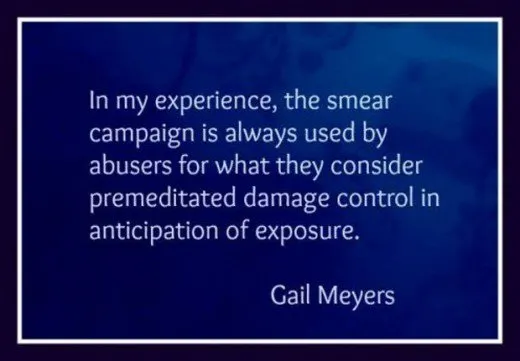
  5. When a scapegoat takes a stand, the narcissist parent will come after them in some way.  This may involve personal attacks, silent treatments, or smear campaigns.  These tactics are used by narcissists to bring people back under their control.
  6. Toxic family systems revolve around the narcissist or other disordered individual, and there is very little normalcy within this system.  The irony is that toxic people will claim that the family is “perfect” and “better than other families”, leaving scapegoats and their siblings with a skewed picture of what healthy family systems should look like.  From there, the scene is set for these individuals to go on to other dysfunctional relationships, thinking they’re ‘normal’ if they look like the system they grew up in.

Above all else, toxic families present the ultimate betrayal.  They leave members, particularly scapegoats, feeling unloved, insignificant, alone, abused, confused, bullied, useless, responsible for all that is wrong in the family, and flawed beyond hope.  And then all of these feelings and beliefs, based on the type of ‘love’ (which is not love at all) experienced in this family system, set members up to be at high risk for winding up in other toxic relationships as adults.


There is hope, though, no matter how much time has elapsed, and it starts with self-love.  Toxic family systems, through their dysfunctional dynamics and behaviours, generally teach self-loathing and self-hatred.  When we learn to love ourselves, we start on the path of setting ourselves free from the toxicity and false narratives.  We deserve peace and love, and both of those things can be created from within ourselves.

Until next time,

Heather ~Natural Clarity Coaching~ naturalclaritycoaching.com na********************@***il.com Natural Clarity Coaching on Facebook, Instagram, LinkedIn, and Twitter

Thanksgiving

For those of you celebrating Thanksgiving this weekend, enjoy! Consider taking a few moments to reflect on everything for which you are grateful in your life, right down to the smallest of things.

If you’re spending time with toxic family and/or friends, you are not alone in that situation. There is a community of people behind you who are having similar experiences, and they are sending you vibes of strength and courage.

If you’re spending the occasion on your own, or being left out, or have gone no contact with family and/or friends, there is also a community of people behind you, sending you vibes of healing and empowerment. They know what you’re going through because they’re going through it, too.

No matter what a special occasion holds in terms of who is or isn’t around, just keep in mind that you always have YOU. And you are more than enough, you are important, you are deserving of love and respect, and you are strong enough to deal with anything that comes your way.

Happy Thanksgiving weekend!

Until next time,

Heather ~Natural Clarity Coaching~ naturalclaritycoaching.com na********************@***il.com Natural Clarity Coaching on Facebook, Instagram, LinkedIn, and Twitter

Narcissists love fanning the flames of discord, especially against scapegoats

For anyone who has had issues with a narcissist or other toxic individual, it is evident that they love to fan the flames of discord. Oh, they’ll smile and try to hide the bellows behind their back, but they’re definitely keeping that fire nice and hot when no one is looking.

When a narcissist chooses a scapegoat (or sometimes more than one), within a family, workplace, or other environment, they then need to continue the narrative against that person at all costs. Without the continuation of this false narrative they have created against their target(s), the entire system upon which they bolster their fragile ego, is at risk of collapsing. This is especially true when they feel that their control is being threatened. Some examples of this may be an enabling parent showing kindness or some other form of positivity towards a scapegoated child, or it could be a scapegoated individual in the workplace who is having a friendly chat with a “flying monkey” co-worker in the lunchroom. Narcissists in particular can’t allow those types of things to happen because it goes against the picture they’ve painted of their target, and they also don’t want to risk people having a discussion about them and discovering the truth.

When toxic people feel threatened, they react with more manipulation and aggression. Basically, they start what is known as a smear campaign. They call their enablers to action through more lies, negativity, and exaggerations about their targets. They ramp up their alleged role of victim in their twisted game where they are, in fact, anything but victims. And their enablers naively jump to their defence and (in their minds) heroically rescue them from such horrible behaviour. Most of the time, enablers and flying monkeys don’t even attempt to hear anyone else’s side of the story. They flat out believe the nonsense they’re being fed. In my experience, some enablers will also return to scapegoating the narcissist’s target simply to bring an end to the ranting and raging. What they truly believe is anyone’s guess; their goal is simply to find a (usually temporary) reprieve from the toxic person’s thunderstorm. Overall, though, toxic people will pull out all the stops in an effort to maintain their control and position within their environment. Those false narratives are the very foundation of the protection of their egos. If they couldn’t triangulate and place blame on others, then they might ultimately be asked by their enablers to face accountability or, even worse, be forced to honestly evaluate themselves and engage in introspection. To a narcissist or other toxic individual, that would be a fate worse than death.

So if we’re the scapegoat and we recognize, based on the behaviour of others, that the narcissist/toxic person in our life has been frantically pumping those bellows and turning up the heat against us, even though we’re typically left in the dark as to what has been said, what can we do? Well, that varies by individual. One method that people find useful is to not JADE; that is, don’t Justify, Argue, Defend, or Explain. Yes, that’s a challenging task. No one wants to have lies floating around about them, and it’s human nature to want to JADE. But another more viable option is to simply live our lives and let our behaviour speak for itself. And in all honesty, silence speaks volumes, people. It truly does. There will always be enablers and flying monkeys. That’s just a fact of life. It lies with us to decide how much we will allow those dynamics to create negative personal impacts for us. Yet another option is to learn to let go of or distance ourselves from people who don’t see us as we truly are, but, rather, choose to believe the tales being spun about us by toxic people who are all about being in control and actively working to destroy relationships that they feel threatened by. Even though it’s easy to feel trapped within toxic systems, and we’ve often been trained to feel that we’re permanently stuck, helpless, and lacking any control over our own lives, we do have choices as to how we react to toxicity and dysfunction being aimed at us. We truly do have power. Remembering that fact and feeling empowered by it is half the battle.

Until next time,

Heather ~Natural Clarity Coaching~ naturalclaritycoaching.com na********************@***il.com Natural Clarity Coaching on Facebook, Instagram, LinkedIn, and Twitter

The hypocrisy of toxic and personality-disordered individuals

“Do as I say, not as I do”. This is a mainstay of toxic people, particularly narcissists. Most adult children of narcissists will likely have plenty of experience with this occurrence. For example, I grew up being force-fed the virtues of always being honest to a fault, to the point where I became a nervous wreck that I might some day be misunderstood by someone and accused of being dishonest. It used to feel as though the core of who I was would melt away if that ever happened. And that was because of the extreme pressure and scrutiny I was placed under to ensure that I carefully considered each and every single word I ever uttered. Ironically, the very “holier-than-thou” person who relentlessly pushed honesty on me and pretended to tell the truth at all costs, turned out to be incredibly dishonest. I just didn’t realize it when I was younger because they touted themselves as a pinnacle of all things truthful, and questioning or disbelief never failed to bring with them harsh consequences for me.

Definition Of A Hypocrite

So how do we uncover hypocrites? If something feels not quite right…if your intuition is chattering at you…if you’re catching someone in inconsistencies between their expectations of the world around them, while engaging in behaviour themselves that they have made clear that they don’t condone – question it. Literally, question it. You don’t necessarily have to confront the person immediately or at all, but, instead, you can run through everything logically in your mind, journal it, or talk with a trusted friend or family member about it. Leave out any ideals you have about the individual. Put aside emotion. Just look at the facts. And if they don’t add up, proceed with caution when it comes to your relationship with them. As the saying goes, “when someone shows you who they are, believe them”. Don’t make excuses for them, and take it as a serious warning. If the evidence amounts to someone who can’t be trusted to live their own life at the same level they seem to expect and, often, demand from others, then keep that in mind in future interactions with this person. Why? Because the likelihood of being damaged by someone who displays hypocritical behaviour is quite high. And we all have the right to protect ourselves from harm of any kind.

Until next time,

Heather ~Natural Clarity Coaching~ naturalclaritycoaching.com na********************@***il.com Natural Clarity Coaching on Facebook, Instagram, LinkedIn, and Twitter

Does ‘no contact’ work?

Hi everyone. After a late-summer holiday, I started back to my university psychology studies. So I’ve been busy. But I wanted to sit down and write a post.

‘No contact’ – does it work? First of all, ‘no contact’ refers to exactly what it sounds like: not being in contact with a particular person or people. Zero interactions of any kind. In many cases, we may decide, in our own best interest, that we can’t be in touch with toxic people. So we then refrain from contacting them or accepting any form of communications from them. We can let people know this is happening in advance, or we can simply make it happen. It’s our choice how we do it.

There’s no doubt that ‘no contact’ can be very challenging to implement at first, particularly if the person or people in question have been a big part of our lives. So it’s best to be prepared for those feelings. As time passes, though, many of us find that peace begins to settle into our lives as a result of keeping ourselves safe from toxic people, and we will become increasingly protective of that peace.

To answer the original question, yes, ‘no contact’ works. So does ‘low contact’ when it’s done on our terms. But it has to be 100 % adhered to on a continual basis. And once peace has settled in, even thinking about reaching out to the person (or beyond ‘low contact’, if that’s what we’ve chosen) will be a thing of the past. Realizing our value and that we deserve respect and a peaceful existence are strong contributors to maintaining boundaries.

Lastly, it’s best not to allow feelings of guilt to get the best of us after we’ve made this decision. Flying monkeys may take a run at harassing us to reconnect with the toxic individual. The toxic person themselves may try to confront us in order to reestablish the status quo. And as people who have been targets of their abusive behaviours, we may already be programmed to quickly or even automatically believe that we’re doing something wrong and should be ashamed. Drop the programming like a bad habit and recognize that we all make our own choices and it’s okay to not want to be treated disrespectfully and abusively. And we have the right to keep people out of our lives if they aren’t good for us. No matter what we may have been told, we have the right to peace and to protect ourselves from anyone at any time.

Until next time,

Heather ~Natural Clarity Coaching~ naturalclaritycoaching.com na********************@***il.com Natural Clarity Coaching on Facebook, Instagram, LinkedIn, and Twitter

It’s YOUR Life

As a member of many online groups on the subject of dealing with narcissists and other toxic individuals, I have observed a variety of common themes within posts. A main current is that of one’s life not feeling like their own. This typically takes the shape of people being almost constantly bombarded with opinions, criticisms, and unsolicited advice about how they should be living their lives, particularly as adults. And, taking it one step further, if the individual doesn’t conform to the opinions, criticisms, and unsolicited advice of these people (narcissistic parents, partners, friends, colleagues, etc.), they will be faced with some form of punishment such as the silent treatment or abandonment, guilt-tripping, a smear campaign, or some other manipulative treatment meant to cause someone to “do as they’re told”.

What we need to keep in mind is that this is OUR life. No one else has the right to tell us how to live it, nor do we owe anyone explanations for our decisions. If someone feels that it’s acceptable to dole out punishment because we have not followed their advice on something within our own life, that’s very telling of their character and not ours. And we have no obligation whatsoever to anyone but ourselves when it comes to our life decisions. Going forward, we may also need to evaluate our relationships with those who feel that they are justified in telling us how to live and then trying to manipulate and control us into doing what they want. There are ways (such as low or no contact, placing boundaries, etc.) to protect ourselves from that type of behaviour.

If we follow our hearts and dreams, trust ourselves as captains of our own ships, and steer clear of other people’s unsolicited interference in our decision-making (very different situation from those times we may approach a trusted individual for advice), we will be fine. And, in all honesty, we all make mistakes. We’re human. As long as we learn from those mistakes, that’s all part and parcel of a growth mindset. It makes us stronger, gives us greater knowledge and experience, and empowers us as we journey through life. No one is intended to have others run their life for them. Nor should we feel guilty or wrong if we make our own decisions. We need to take our own path, believe in ourselves, and not be held back by anyone or anything. So, get out there and live life to its fullest and on your own terms.

Until next time,

Heather ~Natural Clarity Coaching~ naturalclaritycoaching.com na********************@***il.com Natural Clarity Coaching on Facebook, Instagram, LinkedIn, and Twitter

They make it about you because it can’t be about them

It’s intriguing how narcissistically-inclined individuals refuse to take the blame for anything, even when everyone involved is aware that they are clearly at fault. Definitely a case of ego protection. Fragile egos cannot withstand being wrong…ever. And one of the best add-ons to refusing to take the blame is often putting that blame onto others.

Using family as an example, if we happen to be the scapegoat, that makes us the ongoing target of narcissists or other toxic people who need to shift the direction in which fingers are pointing. Plus, it’s easy for a dysfunctional family to accept without question that the designated scapegoat is the problem, even without any evidence or so much as asking for their perspective on the matter at hand. This could also happen in the workplace, social situations, or other environments.

So the next time that you are blamed for something you didn’t do, say, or whatever the accusation entails, consider the source. Is this someone with a fragile ego? Have you thought of them being narcissistic in nature? Do they have to be ‘right’ at all costs in order to continue their mask of perfection? Have they dragged you into it as a scapegoat for their own behaviour? Or is this person a flying monkey, acting on behalf of a narcissist who’s trying to shift blame? If so, stay strong. Take the emotion out and consider the mechanics of it. When you look at the situation from a neutral state, it’s much less complicated to approach. Avoiding JADE-ing – Justify, Argue, Defend, Explain – will also be useful. None of that is necessary. Walk away if you can. Say as little as possible. Don’t engage with the blame projector or anyone who is encouraging or furthering their accusations. Hold your head high. People (particularly flying monkeys) will believe what they want to believe, no matter what we say or do. Know that this has nothing to do with you and you owe no one any explanations or apologies. If you absolutely need to speak for yourself, stick to the facts and leave that emotional component out of it.

And remember, they make it about you because they literally aren’t strong enough for it to be about them. They can’t be wrong. They refuse to be accountable as a result. This is a disordered person and, usually, their merry band of enablers on the sidelines. No amount of explaining, putting forward evidence, or pointing the finger will improve the situation. Narcissists and assorted other toxic people will not back down, especially if it involves their egos taking a hit. It helps to focus on being grateful that you don’t need to live your life like that. Think about how much energy is required to behave in that fashion and continually find ways to protect against any hits to the ego. Leave them to their devices and move forward. It isn’t easy to be blamed for other people’s actions. But accepting the blame is an entirely different aspect. Just because someone says it, doesn’t make it true, nor does it mean we need to accept it. Know yourself and stay loyal to who you are, regardless of whatever chaos may be swirling around.

Trust me when I say that the more you practice leaving the emotion out of interactions with narcissists or their supporters, the easier it gets to stay calm and not be affected by their behaviour. This leads to improved awareness and empowerment, which allows us the tools to avoid being trapped in the future webs of narcissists. Stay strong and aware, my friends! We’ve got this!

Until next time,

Heather ~Natural Clarity Coaching~ naturalclaritycoaching.com na********************@***il.com Natural Clarity Coaching on Facebook, Instagram, LinkedIn, and Twitter

« Older posts Newer posts »