Tag: support (Page 1 of 2)

Life as the Family Scapegoat

From the perspective of an ACON (Adult Children of Narcissists) and a DONM (Daughters of Narcissistic Mothers), I could literally write a book on my experiences. In all honesty, anyone who grew up in a disordered household headed by a narcissist will have innumerable stories they could tell. The tales we can tell are our own but, sadly, the majority of them are incredibly similar at their root level. They all generally boil down to narcissistic behaviours and how they domino out to everyone in their orbit.

If I were to go to a more personal level and summarize my life as the child of a narcissist into its most basic form by using a few examples, it would be this:

As the family scapegoat, I felt from a very early age that my mom and I simply didn’t ‘jive’. The connection just wasn’t there. Being female, and through no fault of my own (from stories recounted to me, this appears to have started when I was just a baby – for example, being told many times over the course of my life that she wanted to throw me against a wall because I cried when I had colic), I triggered her own deep-seated issues, which caused her to target me and resulted in a lack of a bond between us. This woman adores, supports, encourages, brags about and idolizes my younger brother. It’s not as though she is incapable of those things. Ironically enough, when he and I have made similar decisions in our lives as adults, she has raved about how wondrous his choices were but somehow managed to find fault with all of mine. Although this narcissistic behaviour became abundantly clear to me many years ago, it was incredibly confusing when I was younger, and led to me accepting her nonsense and losing any self-esteem or confidence I may have had. This was my mother. My dad went along with it. I believed her to be the all-knowing and wise person she claimed to be. If she deemed me a disappointment and a failure, then she was probably right as far as I was concerned. That’s what narcissistic abuse has the potential to do to a person when they don’t have a knowledgeable support system or awareness to lean on.

Throughout my childhood and into my teen years, I was pressured and expected to excel at everything I did while, simultaneously, a cloud of low expectations hung over my head. My mom expected me to be the best (because in her mind this would make her look good to the outside world) while at the same time telling me I was “just average” (she’s big on labelling, especially when it comes to intelligence). To add insult to injury, no matter how well I did in school or other pursuits, it was never good enough for her. An ‘A’ on a test would result in her questioning why it wasn’t an A+. On occasions when an A+ was awarded, apparently it was obvious to my mom that the test was too easy and likely everyone in the class did well on it. Or sometimes she surmised that the teacher must have favored me and therefore the mark wasn’t truly representative of my (in her opinion, limited) abilities and was undeserved and, in fact, unfair to my classmates. The same judgments were a constant for any of my other pursuits, including sports and, especially, music. She always heard that one little mistake and, in her opinion, that ruined the entire performance. That one error would be blown out of proportion and zero credit would be given for the thousands of correct notes and other musical elements that go together with them. Looking back from an adult’s point of view, I realized that from a young age I began focusing on the negative and not looking at my strengths as a direct result of my mother’s constant judgments and criticisms as well as the almost complete lack of encouragement and support. One mistake became catastrophic in my mind.

My friends were also constantly being critiqued and negative comments made to me about them. In her mind, I never chose the ‘right’ friends (or partners as I got older). She would literally suggest the people that I should spend time with (people she felt would be “good friends”) and would badger me about it on a regular basis. There would be comments made by her that my chosen friends were abusive (ironic, isn’t it?!) and that I needed to “get a backbone” and “stand up” for myself. One time when I had a falling out (temporary, thankfully) with a friend (which, by the way, was instigated by my mom and her constant prodding), I shared with my mom just how upset I was that I felt I had lost my best friend. Rather than comfort me or say something supportive, she started crying and told me that she thought she was my best friend and that what I said had hurt her deeply! Within a couple weeks, though, she was talking about how many years she and her “best friend” had known one another!

One moment that is very vivid for me after many years was the time that I told my mom that I was feeling depressed. After getting this out in the open, I started to cry because I was feeling emotional. She slapped me across the face, told me to “snap out of it” and then stormed out of the room, slamming the door behind her. Needless to say, that was truly a lesson in not sharing my feelings that has stuck with me since then. Working through it has been a process but is well worth it.

In terms of my family of origin (FOO), it was dysfunctional from day one. My dad, bless his heart, is a lovely man who is loyal and kind to a fault. Does he see my mom for who she is? I don’t know for certain. I’ve seen glimpses of awareness over the years but his enabling behaviour continues regardless. However, I do understand the reason for this. My mom has a strong “you’re either with me or against me” mentality with everyone in her life. If my dad even slightly appears to side with anyone but her, days or sometimes weeks of misery rain down upon him. Her vicious griping is equally as undesirable as her cold stares and silent treatment. I don’t blame him for wanting to avoid all of that. I get it because I’ve lived it, too. He has spent decades working/escaping more than he was home so I’m sure it’s nice to look forward to downtime rather than dreading it. But it’s also really difficult for me to have always been the scapegoat (my golden child sibling was, of course, rarely held accountable for anything), the black sheep, the one “in the wrong” no matter what, the one whose perspective was not allowed to be heard. As an aside, I had an absolutely wonderful grandmother who lived nearby who was supportive, loving, caring and an amazing friend. Without her … well, I wouldn’t even want to imagine how much more challenging life would have been. Although we rarely spoke of my mom or her behaviour (it’s quite likely that she had never put a name to it, and she was also someone who didn’t speak of others behind their backs), my grandma was there for me and that was what mattered.

Fittingly enough, the final narcissistic straw for me that led to many and continuing years of low and rare contact (never in-person or by phone) with my parents was, after several months of ridiculous drama, my mom pressuring my dad to the point where he informed me that I had “been the problem in this family for XX years” (the X’s represent my age at the time). Yes, folks, apparently my just being born was an issue and, in fact, the very reason our family was so disordered. After all that, I was then informed by my mom that my dad wouldn’t have said that (it was said in front of a witness) and that I needed to apologize. And that situation from start to finish is something that really sealed the deal for me in recognizing that I genuinely was not and had never been “the problem” in my family, no matter how much my narcissistic mother needed to label me as such in order to avoid dealing with or having other people focus on her many serious issues and the trouble those had caused within our family unit. Before I could walk, talk or be independent enough to even cause a problem for anyone, I was negatively labelled and that continued on because my mom needed it to and my dad felt that he was required to go along with it or else be made miserable (yes, he had choices but his blind loyalty and trying to protect his own peace traditionally came and still comes first). And then to be be informed that I had made up my dad’s words to me and should apologize … well, that was added to the already large stores of strong evidence that my mom holds neither herself (I don’t recall her ever sincerely accepting responsibility for her actions or giving a genuine apology for anything) nor anyone who acts on her behalf accountable for anything. Shifting the blame is typical behaviour, particularly blaming the family scapegoat.

So, obviously this is an incredibly shortened version of a small number of my experiences within a narcissistic family. There are hundreds, maybe thousands more that I could write about but it would take me well beyond the scope of a website post. Since becoming aware of my mother’s issues, how it impacted my family of origin, and how it has deeply affected me on more levels than I ever thought possible, I have read, researched and taken in everything possible on the subject of narcissism and its far-reaching impacts. I have worked diligently on my own recovery and committed years ago to helping and supporting others in doing the same. I also firmly believe in educating people in the realm of narcissism awareness so that some might be spared from being victims of the damage caused by individuals with this personality disorder. Difficult as they were, my experiences have made me the person I am today and also placed me in the position of being there to help others who find themselves in the grips of narcissistic abuse and/or attempting to recover from it.

Until next time,

Heather Natural Clarity Coaching naturalclaritycoaching.com na********************@***il.com Natural Clarity Coaching on Facebook, Instagram, LinkedIn and Twitter

ACONs (Adult Children of Narcissists) and dealing with becoming aware

As an adult child of a narcissist, life can be challenging in many ways. The shock of the realization that one’s parent(s) is/are narcissistic can be shocking, disappointing, depressing, anxiety-provoking, disillusioning, etc. Having a trustworthy support system is crucial, be it a family member, friend, therapist, life coach, online support group or another resource. This new awareness opens up not only intense emotions with regard to the narcissist parent (and possibly the other parent or family members , who may be a ‘flying monkey’, and maybe a sibling who is a ‘golden child’) but also about ourselves (and quite possibly our previously unknown role in the family as the ‘scapegoat’).

First of all, we are learning that this person, our parent, who we probably believed to be the end all and be all has turned out to be disordered. We may have thought they were any number of amazing things (mostly because they led us to believe this and brought down consequences if we questioned it) and now it may appear that none or very little of it was accurate. Our lives have been shaped by this person, often in negative ways. This realization will likely bring our entire upbringing and belief systems into massive question. Without a doubt, our relationship with this person will feel broken and confusing. Pulling away seems like a good option, temporary or otherwise. It feels as though everything is a lie and we commonly begin questioning our family, childhood, experiences, beliefs, feelings. We need to work through all of this to get to a better place.

In addition to the above, it is common to then begin analyzing ourselves in this new light. Our lives, our belief systems, our relationships … everything may seem to have been upended in a heartbeat. Turn to supports now more than ever.

With your trusted resource(s) of choice, it is beneficial to talk about your feelings. Get them out in the open in a safe environment and work on processing them. Be patient with yourself. This step takes time. (Keep in mind that Complex PTSD and/or other mental health issues may also be realities that you need to either rule out or get help for) The fog will lift and clarity will take its place. We need to believe in ourselves, our abilities and our hope for the future.

If you are not well-versed on narcissism, it never hurts to educate yourself about the traits and behaviour so that you can see this person as they are and understand what is behind their actions and words. As I always say, these are weak people with fragile egos that they spend most of their time protecting, often at the expense of the people around them as they attempt to control everything and everyone in their lives.

I strongly recommend online support groups as a resource to lean on for support. Whether you post or comment or simply read the words of others, you will know that you are not alone and this can be of great comfort. People in these groups are at various stages of their recovery, but above all else, they know what you’re experiencing because they are going through or have been through similar experiences.

As ACON’s, we need to give ourselves credit for what we have survived and the steps we will continue to take to keep ourselves strong and whole with this new reality in mind. We have endured incredibly difficult situations within our family of origin (FOO) but we are still standing. If this isn’t a testament to our great strength, I don’t know what is. Try looking at this as the end of one chapter and the beginning of a new and wonderful chapter on your journey. The best is yet to come and we will find that peace and happiness that has been so elusive in the past. This is a time of awakening and awareness that can help us to thrive if we are willing to take that step for ourselves. We are worth it!!

Until next time,

Heather ~Natural Clarity Coaching~ naturalclaritycoaching.com na********************@***il.com Natural Clarity Coaching on Facebook, Instagram, LinkedIn, Twitter

When you leave a narcissist, do they try to win you back?

The answer to that question is: Yes, most narcissists will try to win you back if you leave them. However, they don’t do this for the same reasons that non-narcissists might. A major misstep is to believe that a narcissist thinks and feels like you do. In reality, they are coming from a completely different mindset; a mindset where winning someone back is about just that – winning. As always, their actions have absolutely nothing to do with you. Their actions are based on protecting their fragile egos by controlling everything and everyone around them.

Narcissists will use the tactic known as ‘love bombing’. Here, they engage in larger-than-life demonstrations of attention and affection in an attempt to influence someone. In the case of someone leaving them, they will love bomb to get that person back in order to feel better about themselves after being left and to regain control of the person in question. Many narcissists will actually win someone back just so that they can abandon them and then move on with their next victim.

Hoovering is a similar tactic used by narcissists. Just like the vacuum cleaner brand, Hoover, the disordered person will attempt to ‘hoover’/suck in the person who left them and bring them back into the abusive relationship. They may make promises that they will never cause any more hurt, that they will change, that everything will be different this time. This can all appear to be incredibly believable and sincere. Narcissists are generally very good actors and it’s not difficult to get drawn back into their web. The unfortunate part is that it’s all an act. Nothing will improve, and if it does, it won’t stay that way for long. It is all based on empty promises in an effort to manipulate, control and further abuse a partner, family member or friend, etc.

So, yes, narcissists will typically try to win you back if you leave them. But it’s not for reasons based on love, seeing the error in their ways, changing their negative behaviour, caring or anything positive. It’s all about winning, maintaining control, keeping their ‘supply’ (your attention for the purpose of their ego-stroking) intact, making sure that they maintain a certain image for the world around them, and ultimately avoiding ‘narcissistic injury’ (the experience of narcissists when they lose, are criticized or abandoned).

If you are thinking about, in the process of, or have recently left a narcissist, it’s helpful to keep in mind the information set out above. There’s no doubt that many victims of narcissists go back to them at least once after leaving. That’s a common and understandable occurrence. It doesn’t suggest any weakness or lack of intelligence; it’s related to being a human who wants to feel loved and to not feel that they have been wasting precious time in a particular relationship. Never feel ashamed or weak if you return to a narcissist and then find yourself in the same situation in not too long. Removing oneself from narcissistic abuse happens in stages as we become increasingly aware. And wanting to believe that someone you love could change for the better is not a negative mark on your character. Believing in the potential for change and love is a beautiful thing. Unfortunately, not everyone in our lives is up for the challenge. That’s their issue, not ours.

Armed with information about narcissistic tactics can help, though, to get us through the process of walking away when we feel it’s time and having the awareness of what would likely happen if we were to return. Knowledge is power. And as I mention often, asking ourselves honestly how this person truly makes us feel is an informative gauge to use in our decision-making with regard to the relationship. Do you feel loved or like a burden in their life? Are you treated with respect or disdain? Do you feel supported or sabotaged? Are your accomplishments/talents/skills encouraged and appreciated or is a never-ending list of alleged flaws being regularly highlighted? Do you feel comfortable in their presence or as though you’re walking on eggshells? Can you be yourself around them or do you need to filter or change who you are in order to be even slightly accepted and not constantly condescended to? Look at the entirety of your relationship and assess it overall with these types of questions. Honesty is integral. And listen to not only your mind but to your heart and soul. Tune out all external voices and opinions and tune in to yourself. The answers are always there when you’re ready to hear them.

Until next time,

Heather ~Natural Clarity Coaching~ www.naturalclaritycoaching.com na********************@***il.com Natural Clarity Coaching on Facebook, Instagram, Linkedin and Twitter

Dealing with the emotional reaction to realizing you’ve been experiencing narcissistic abuse

The realization of the fact that you’ve been experiencing narcissistic abuse is a double-edged sword. On the one hand, your eyes have been opened and you are now aware, which offers you the opportunity to make well-informed choices for yourself. On the other hand, this awareness often brings with it feelings of anger, regret, sadness, shame, isolation, confusion and so on. It basically takes your emotions on a whirlwind roller coaster ride.

My advice is to allow yourself to fully feel the array of emotions. They will be intense and sometimes overwhelming but you need to feel them in order to move on to processing them. Cry, scream, punch a pillow, etc. If you feel the need to talk with someone about your journey, do your best to turn to someone you know you can trust. This could be a family member, friend, support system such as Natural Clarity Coaching, or a counsellor/therapist. It’s not advisable to share your feelings with your abuser because that will simply open more doors for them to continue abusing you and playing mind games. Clarity is incredibly important at this time, so not allowing the narcissist to muddy the waters is beneficial. Yes, you’ll want to tell them that you’ve figured them out and that you’re incredibly hurt and upset. Just remember that these are people who lack empathy and compassion; they will never sincerely take accountability for their actions let alone offer up an apology or anything else that might make you feel less damaged. Plus, their goal is to continue to control you and carry on with your focus being on them, so keeping your feelings quiet from this person is usually the best policy. Find whatever trustworthy and helpful support systems you can while you’re moving through this part of the journey. Of course, if you prefer to do this solo, by all means, do. Whatever works for you. If you want to but can’t find anyone (or even if you can but could use more connections), online support groups can be incredibly helpful. There is something comforting and empowering about being able to read posts, write posts or comments if you want, involving people who have been or are currently in a similar place as you in a relationship with a narcissist (parent, partner, friend, etc.), It helps with gaining insight, feeling understood without having to explain yourself, seeing all of the parallels in the narcissists’ behaviours, and gaining strength in the knowledge that you didn’t cause this situation. In fact, many people begin to see that most narcissists seem to operate by the same play book! Sad but true.

The fork in your journey’s path

When you’re with the narcissist or by yourself in these early days of awareness, bring in calming and self-soothing practices such as deep breathing, mindfulness (being present in the moment without judgment), engaging in hobbies, getting out into nature, exercising, to name a few. Try to keep your mind from ruminating and replaying all of the negativity. That will just drag you into a potential state of depression and/or anxiety. And it’s okay to feel anger towards the narcissist but advisable to keep it under wraps. Now is the time to engage in self-care in order to keep yourself strong on all levels. Educate yourself on narcissism and how it has impacted you. Put some time into getting back in touch with yourself, your needs, your hopes and dreams. Focus on the future and what and who YOU want in your life from now on. You have arrived at a fork in your journey’s path and you have options from which to choose. Make plans for how you will deal with your new view of the relationship in question. Yes, there will no doubt be days that it all seems like too much and you might feel utter sadness and loss. You might even try to convince yourself that you’re wrong about this person and that you should give them a second chance. That’s perfectly ‘normal’.

As I’ve mentioned in previous posts, a great gauge for relationships is honestly taking a close look at how you truly feel when you’re around someone. Does the way they treat you make you feel good about yourself? Do you enjoy spending time with them? Do you feel cared for and important? Or does their behaviour make you feel unloved, unappreciated, and generally less-than? Is there often an air of condescension and disdain from this person when you interact with them? Do you regularly feel fearful in their presence, like you’re walking on eggshells, or worried that they could abandon you at any moment? Do you feel manipulated, controlled and/or under attack and as though you’re always making them upset and/or angry? Asking yourself these questions and answering them with 100 percent honesty can be a great reality check, especially if you have recently wondered if or decided that someone in your life is abusive towards you.

In summary, here are possible steps (in their simplest form) towards recovery:

  1. Let the information about the narcissist and abuse sink in. Take all the time you need. It is typically shocking and life-altering when this revelation takes place.
  2. Allow yourself to fully feel the emotions that come along with this realization, regardless of how difficult it may be. Do your best to not skip this step. It may seem too intense or as though you can just stuff everything down, but it doesn’t work that way. Feel them, because whether they make you angry, sad, confused, empty, or anything in between, you need to feel them. This is an integral part of the process.
  3. While you are working on Step #2, do some research on narcissism and narcissistic abuse. You will likely discover that narcissists are disordered, dysfunctional people (most of whom have been hurt by other narcissists) who spend every waking moment trying to protect their fragile egos. If you happened to get caught up in their vortex, just know that their behaviour had nothing to do with you. You are not to blame. They are on auto-pilot in their lives, seeking to constantly fill a never-ending void (supply of attention from others) and to placate and dull their underlying feelings of weakness, neediness, low self-esteem and dysfunction. They typically demonstrate the same cycle of behaviours in most of their relationships. When you realize that, despite all the narcissist’s complaints and projections directed at you, their problems and issues are not your fault, you aren’t defective or to blame for everything that goes wrong in their life, you are deserving of kindness, respect and caring, then you will learn to expect so much more for yourself and not be willing to accept sub-par treatment.
  4. Begin to process your emotions. You’ve taken the opportunity to feel them, and now it’s time to look at them from a more practical standpoint. Sometimes it helps to do this with a therapist or within a safe support system. But if you feel that you want to start out on your own with it, give it a try. Don’t expect this stage to be a quick one, though. The gamut of emotions has likely been run throughout your relationship with this person so there will be a lot to sort through and try to make sense of. You may even question everything you felt or believed in the past. You may need to revisit many different memories and experiences in order to look at them from a new point of view. That’s okay. In time, your mind and heart will put it all together in such a way that you can move forward more easily. For now, show yourself patience, understanding and love. You’ve been through a very difficult experience and you need to feel compassion for yourself.
    Whatever you do, don’t skip this step.(#4). When we leave emotions and challenging experiences unprocessed, they don’t just go away. They will interfere with our everyday lives and new relationships and friendships, sometimes in ways that the connection to your past experiences isn’t even on the radar. They will pop up at times when you least expect them, sometimes in the oddest of ways. But have no doubt, they’ll be there until you deal with them once and for all. Imagery can help here. A good exercise is to face the memories/thoughts/feelings head-on. Picture each of them as being on a sheet of paper. Be honest with yourself about how you felt at that particular time and how you feel now. You could even write everything down and then burn the papers later, or work through it out loud with a trusted support person. And then, when you feel ready, imagine placing that sheet of ‘memory’ paper into a file folder marked ‘Closed’, which then goes into a filing cabinet or even a bonfire. Whatever works for you, give it a try. EMDR and Brainspotting are also very helpful for processing difficult emotions and thoughts. Find a qualified practitioner if this interests you.
  5. Start making plans for your future that include your hopes and dreams. It’s finally your time to fully take care of yourself and begin to look forward to what lies ahead on your journey. And now that your awareness of narcissism has grown, you will be much less likely to fall prey to a narcissist in the future.

Wishing you well on your journey!

Until next time,

Heather ~Natural Clarity Coaching~ www.naturalclaritycoaching.com na********************@***il.com Natural Clarity Coaching on Facebook, Instagram, Linkedin, Twitter

What is Emotional/Psychological Trauma?

In emotional/psychological terms, trauma can be described as a deeply disturbing or distressing experience. Another description of trauma is emotional shock following a stressful event or physical injury.

Three of the Main Forms of Trauma:

Acute – Resulting from a single dangerous or stressful event (PTSD)

Chronic – Resulting from repeated and prolonged exposure to highly stressful events (domestic violence, child abuse, bullying, etc.) (Chronic PTSD)

Complex – Resulting from exposure to multiple traumatic events (Complex PTSD)

Here are some of the signs and symptoms of emotional and psychological trauma (cascadebh.com):

Cognitive:

  • Intrusive thoughts of the event that may occur out of the blue
  • Nightmares
  • Visual images of the event
  • Loss of memory and concentration abilities
  • Disorientation
  • Confusion
  • Mood swings

Behavioral:

  • Avoidance of activities or places that trigger memories of the event
  • Social isolation and withdrawal
  • Lack of interest in previously-enjoyable activities

Physical:

  • Easily startled
  • Tremendous fatigue and exhaustion
  • Tachycardia
  • Edginess
  • Insomnia
  • Chronic muscle patterns
  • Sexual dysfunction
  • Changes in sleeping and eating patterns
  • Vague complaints of aches and pains throughout the body
  • Extreme alertness; always on the lookout for warnings of potential danger

Psychological:

  • Overwhelming fear
  • Obsessive and compulsive behaviors
  • Detachment from other people and emotions
  • Emotional numbing
  • Depression
  • Guilt – especially if one lived while others perished
  • Shame
  • Emotional shock
  • Disbelief
  • Irritability
  • Anger
  • Anxiety
  • Panic attacks

Below are some of the most common forms of trauma therapy:

Cognitive Behavioural Therapy (CBT)

Behaviour Therapy (Exposure Therapy)

Psychodynamic Therapy

Eye Movement Desensitization and Reprocessing (EMDR)

Hypnotherapy

Group Therapy

Pharmacotherapy (Medication).

Unfortunately, trauma is a part of many people’s lives. Becoming trauma-informed (understanding how trauma is created and the symptoms, behaviours and needs of people who have been traumatized) is beneficial on both personal and social levels, regardless of whether we have experienced trauma firsthand. Understanding, patience and compassion go a long way in being supportive of possibly yourself and/or others in your life who are suffering.

Until next time,

Heather ~Natural Clarity Coaching~ www.naturalclaritycoaching.com na********************@***il.com Natural Clarity Coaching on Facebook, Instagram, Linkedin, Twitter

It’s possible to steer clear of the narcissist’s storm

Narcissists – they’re a dramatic bunch. Their antics often blow in like a storm. Most of what they do involves attention-seeking tactics, gossiping as though it’s their life’s mission, and over-the-top scenes to convey their false victimhood to anyone willing to listen. It’s all one big show to protect and feed their fragile egos.

In virtually all cases, narcissistic behaviour involves blaming someone else for either something they actually did or potentially for an event that is completely fictional. This allows the narcissist to shift responsibility and accountability away from themselves (or, in the case of a fictional event, create drama because they thoroughly enjoy it) while making a show of putting someone else down (which makes them feel ‘more than’) and usually creating a victim story for themselves in the process. It’s a triple-whammy against whoever their target happens to be. Not only are they accusing you of wrongdoing and berating your character for it, but they may also be adding in some false injustice that you carried out against them in the process.

My advice is to not take any of it personally. This has nothing to do with anyone but the narcissist. They may be looking for attention because they are in need of an ego boost, seeking out drama because they’re bored, trying to escape accountability, etc. You’re just a pawn in their game. Simply refuse to play.

If the narcissist’s newest ploy (bringing other people into it while putting you on the hotseat, for example) causes issues that need to be resolved, face it head-on and try to leave emotion out of it. State the facts, don’t engage with the narcissist and then move forward. Stay calm and don’t get drawn into their storm. A narcissist will bog you down in arguments and pointless details for days or more if you allow it. They thrive on drama and conflict. The best thing you can do to protect yourself is to give the situation the minimum amount of energy possible (if it’s something that even needs to be dealt with; much of what narcissists do is quite ignorable) in a business-like way and then be done with all of it. This will hopefully shut it all down and also make the narcissist less likely to target you in the future. When they realize that someone has seen through them and their ongoing trouble-making, they will typically discard that person eventually and replace them with someone who doesn’t yet ‘have their number’. Quite honestly, having a narcissistic personality must be a hellish way to go through life – so much of their energy goes into ego-stroking. It can be helpful to view a narcissist through that lens because it allows you to see that almost everything they do revolves around themselves and their fragile, overly sensitive egos. That, quite honestly, is pitiful, and awareness of it is a major key in dealing with narcissists.

To sum it up, I always recommend reacting to narcissistic behaviour as briefly as possible and attempting to keep it emotionless. They prey on our emotions so do your best to leave those out of it. Once you’ve said or done whatever is necessary to prevent or repair issues created by the narcissist’s latest manipulation, leave it be. Take away any energy or emotion so that there isn’t anything for them to feed on. This requires practice but it’s completely achievable in time. And, best of all, it works.

Until next time,

Heather ~Natural Clarity Coaching~ www.naturalclaritycoaching.com na********************@***il.com Natural Clarity Coaching on Facebook, Instagram and Twitter

What other people think of you is none of your business; an important key for living a happier life

Here’s the lowdown on many people – they will believe whatever suits them about a particular situation/person. Whether their conclusion is accurate or not, their existing belief system, need to ‘follow the crowd’, low self-esteem or a whole host of other factors, will shape their perception and judgment of whatever information is in front of them.

If you happen to have been the subject of a conversation that you are made privy to afterwards and you appear to have come out looking like the ‘bad guy’, you could spend all day, every day attempting to convince certain individuals of your innocence, etc. But the fact remains that no matter how much energy you put into justifying and defending yourself, they will still believe whatever they want to believe about you. We can only control our own thoughts and actions. There is absolutely nothing any of us can do when it comes to what someone else chooses to believe about us, true or otherwise.

When narcissists are involved, the situation can be even more challenging. If a narcissistic individual has targeted you and started a smear campaign against you to other people, this can be a difficult enough situation to cope with. Add in the high possibility that the narcissist will be portraying themselves as a victim as well, and you will typically be looking at a heaping pot bubbling over with gossip, untruths and judgment.

I’ll admit it – this 110% used to bother me. It was a driving force in my life for years upon years. I felt as though I needed to justify my words/actions and defend my character and reputation to all who may have been manipulated by the person in question (most often a narcissistically-inclined individual) into believing that I was (fill in the blank). Those situations caused me endless worry, sleepless nights and a ton of stress and anxiety. I naively believed that if I was given an opportunity to plead my case, people would miraculously recognize that they had been given false and misleading information and they would instantly “see the truth” and change their erroneous beliefs about me. It definitely doesn’t work that way with most people. We all have our own perceptions, belief systems and moral code that we live by and it’s rare for any two people to share the exact same ones.

For me, the big a-ha moment came when a situation took place several years ago involving a person I absolutely adored, someone I thought should have known me better than to believe the tall tales of a narcissist. And yet, they did just that. They believed the narcissist and then destroyed our relationship over it. It was as though a light bulb went on in my mind. I realized then and there that no matter what I did or said or shouted from the rooftops, people will believe what they choose to believe, regardless of whether it is accurate or not. When a narcissist is at play as well, gleefully adding to the character assassination with their distorted stories of rewritten history and claims of being victimized, everything becomes just that much more intense.

I have to say, even though the situation that brought me to this awareness caused extreme emotional distress at the time, it also removed a huge weight. This person who I thought knew my character well enough to see through untruths about me had chosen instead to accept them. I had known this person my entire life and thought I could always trust them to have my back. But, regardless of their reasons for choosing to believe narcissistic tales, it had become instantly clear to me that there was absolutely nothing I could say or do to change what this person believed about me. And if this person who was a close part of my life could make that choice after years of knowing me and completely ignore the fact that I wasn’t capable of the lies being told about me, then those who didn’t know me well or at all undoubtedly could and would do the same, and there wasn’t a thing that would change that. Suddenly, what others thought of me, whether they believed outright lies about me, whether they heard my perspective or judged me in ways that didn’t fit with my character – it no longer mattered to me or controlled me in any way. It was an emotional and empowering moment in my life. That self-imposed burden of caring what other people thought of me or of anything or anyone else, for that matter, or naively thinking that the truth would always prevail, was instantly removed and tossed away, never to return.

The truth is that, without a doubt, most people (those who don’t have your back, I mean) will believe what they want to believe about you, even if it’s some nonsense imparted to them by a narcissist with a vendetta against you. Whether those beliefs are good or bad, accurate or inaccurate, there is absolutely nothing we can do to change someone else’s beliefs. Setting ourselves free from the shackles of outside opinions is an incredible gift. Recognizing that regardless of what we say or do, others will believe what they choose to believe, can make an enormous difference in the quality of our lives. We have the ability to set ourselves free from these confines and to go forward each day knowing that we do not need to be slaves to what anyone else thinks, feels or believes about us.

You know your character and exactly who you are. Go out into the world with your head held high. Life goes on for you regardless of what other people are thinking of you or anything else. And if you find yourself struggling with it some days, just remember this saying – “What other people think of you is none of your business”.

Here’s an idea and corresponding link for a journal to keep track of your thoughts and experiences while on your journey:

https://amzn.to/3RDW3SV

Until next time,

Heather ~Natural Clarity Coaching~ www.naturalclaritycoaching na********************@***il.com Natural Clarity Coaching on Facebook, Instagram and Twitter

*Disclaimer – I may earn a small commission if you click on the above link and purchase the product.*

My “Why” as a Narcissistic Abuse Recovery Coach

I think it’s natural to sometimes wonder what brings a person to a certain career choice. For anyone who might be curious as to why I write the posts contained on my website, offer recovery support services, and how it all came about, my answer is a fairly simple one:

I have experienced a great deal of narcissistic abuse over the course of my life and within a variety of relationships. It negatively impacted quite heavily on all areas of my existence over the years. When the “a-ha” moment arrived in the form of awareness of narcissistic abuse and its dynamics, my recovery began.

Since that point in time, I have made a commitment to helping others find their way on the path to recovery from narcissistic abuse. Off the start, I felt completely alone with this new realization (which is one of the many reasons that I believe the support system I offer to be so incredibly important). I wasn’t sure who to turn to or what to do next. In time, I engaged in extensive therapy, read every book on the subject of narcissism, abuse and related issues that I could get my hands on, took and continue to take courses on a variety of topics not only to further my understanding of recovery and ongoing self-care but to better help others, severely limited my interaction with narcissistic individuals and focused on finding myself after years of being controlled, manipulated and told who I needed to be. It has, as a result, become my mission to inform, assist and support anyone who is in search of recovery from narcissistic abuse. This all comes from a place of lived experience, empathy, knowledge and the strong belief that no one should have to endure suffering and sustain personal damage as a direct result of the behaviour of disordered individuals such as narcissists.

So, in simple terms, that’s my ‘why’. If you would like to know more about the recovery support and other services that I offer, please feel free to drop me an e-mail at na********************@***il.com. I will get back to you within 24 hours. There is also a wide selection of ever-growing posts to be found on my website.

Until next time,

Heather ~Natural Clarity Coaching~ www.naturalclaritycoaching.com na********************@***il.com Natural Clarity Coaching on Facebook, Instagram and Twitter

When someone asks, “Why do you/did you stay with the narcissist?”

So, this is definitely an issue for many of us who have been or still are in a romantic relationship with a narcissist. Well-meaning (most of the time) people who have not had the experience of being manipulated and damaged by a narcissistic parent, role model or trusted friend/mentor/etc. can’t understand why we “put up with” someone who doesn’t treat us well in an adult romantic relationship. They look puzzled, ask questions and just generally appear to be lost on the subject.

What they don’t understand is the dynamics behind being raised within a narcissistic family unit or having been groomed and trained by a narcissist outside of our family of origin. Everyone has their own unique experience with this in terms of who shaped them and how, but, in the end, the damage is done.

As people who have been negatively impacted by narcissism, we tend to have a skewed view of what love looks like. With a narcissist in our earlier years, we are led to believe that we are undeserving of kindness, caring, authentic love, compliments and genuine affection. We are typically made to feel ‘less than’, unlovable, disliked, scapegoated, and just generally a waste of space. We’re often told that we’d be lucky if anyone ever loved us because we’re so undeserving of it based on all of our alleged flaws and faults. And so we tend to enter into relationships that remind us on an emotional level of our early family, etc. relationships with narcissists. These types of bonds are familiar and they feel like love (or, at least, the version of ‘love’ we knew), even though deep down in our subconscious we know they are anything but. We accept terrible behaviour from narcissistic romantic partners, interspersed with decency here and there, because that’s what we know and it’s what we feel we deserve because we’ve been made to believe that we are so lacking and unlovable all our lives. We often feel fortunate that anyone is willing to even give us a second glance and we accept abusive behaviour just so that the relationship can be maintained.

People who haven’t had these negative experiences can never truly understand the damage it does, the massive long-term effect it has on us, or why children of narcissists or victims of other narcissistic individuals are commonly drawn to and form romantic relationships with narcissists as adults (unless/until we become aware and then work to repair the damage).

So when someone asks you why you stay with an unpleasant partner (the word ‘narcissist’ may not come into play) or why you stayed so long before leaving, unless it’s a therapist or counsellor who is working with you, maybe just consider telling them it’s complicated. We don’t owe anyone an explanation for our life choices and the reasoning behind them. Sometimes we don’t even have those answers ourselves yet, anyway. But it’s helpful to recognize that someone who hasn’t experienced years of narcissistic abuse would be hard-pressed to understand what it’s like or the negative impact it has on every level of a person’s life. And know that you’re not alone. There is support available through a variety of online forums, professional therapists, self-help books, narcissistic abuse recovery coaching with myself at Natural Clarity Coaching, and so on. Reach out for help when you need it.

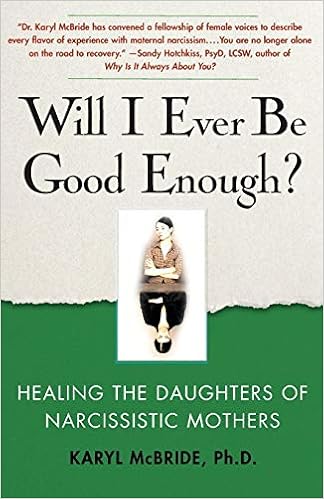
If you are interested in reading about growing up in a narcissistic family of origin, here’s a book that many people find helpful. It’s geared towards daughters of narcissistic mothers but the same principles apply to narcissistic mothers or fathers and their sons or daughters.

https://amzn.to/46KQKVG

Until next time,

Heather ~Natural Clarity Coaching~ www.naturalclaritycoaching.com na********************@***il.com Natural Clarity Coaching on Facebook, Instagram and Twitter

*Disclaimer – I may earn a small commission if you click on the above link and purchase the product.*

Self-Care Series – No. 2 – Acupuncture and Acupressure

Continuing on with the short self-care series, our focus should always be on caring for ourselves to ensure that we are strong and as healthy as possible on all levels. Dealing with narcissists is usually a draining experience and it’s easy to lose ourselves in all of the drama and exhaustion from it.

So … acupuncture and acupressure. Both are based on promoting wellness and relaxation as well as treating disease. Acupuncture involves a practitioner stimulating certain points in the body, most often inserting thin needles through the skin. It has been found to be beneficial for some individuals with conditions such as low back pain, neck pain, osteoarthritis/knee pain, headaches/migraines and other conditions. I found acupuncture extremely helpful for pain with a herniated disc in my lower back many years ago.

Acupressure uses pressure to stimulate points on the body in an effort to clear blockages within a targeted area. Hands, elbows and other tools are used for this activity, and it can be performed by a practitioner or by oneself.

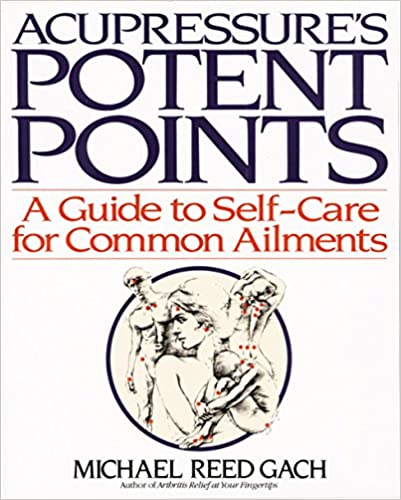
While living with a narcissistic individual, I often had headaches or migraines brought on by stress. Acupressure and acupuncture are both great options for relieving stress, improving relaxation and allowing the body to heal itself. One such acupressure exercise for potential headache/migraine relief is as follows: Using the thumb of one hand, press the webbing between the thumb and index finger of your other hand. Try to angle the pressure toward the bone that connects the index finger and hold for one minute. Then do the same for your other hand. I recently purchased this book, “Acupressure’s Potent Points A Guide to Self-Care for Common Ailments” by Michael Reed Gach. So far, I have found it to be quite a useful resource. Here is the link for this book:

https://amzn.to/3RvaEQ8

I quite possibly sound like a broken record, but self-care is so extraordinarily important. I can’t emphasize enough just how crucial it is, particularly when dealing with narcissistic abuse. Do what you can to keep yourself strong. It’s easier to maintain strength and wellness than it is to start from scratch. Narcissists often try to convince us that we aren’t important and therefore there’s no point in taking care of ourselves. Don’t buy into that philosophy because it is 110% incorrect. We do matter and we are worth it.

Until next time,

Heather ~Natural Clarity Coaching~ www.naturalclaritycoaching.com na********************@***il.com Natural Clarity Coaching on Facebook, Instagram and Twitter

*Disclaimer: I may receive a small commission if you click on the above link and purchase the product.*

« Older posts