Tag: self-esteem (Page 10 of 12)

Difficult Realizations

(Just a note to start off with.  As promised, more to come on self-acceptance (see previous post) in an upcoming post.)

Anyone who reaches an awareness of the toxicity of someone in their life – be it a parent, sibling, significant other, etc. – has to have experienced a major realization at some point.  That a-ha! moment where everything (months, years, or even decades) suddenly makes sense.  “Oh, wow.  My Mom behaves like a narcissist!” or “My best friend of 10 years has been plotting to steal my partner all this time!”  Something will trigger us to see what’s really been going on.  An epiphany of sorts.

For many of us, this new reality may become crushingly clear.   It could come in the form of suddenly realizing that not only has, for example, a parent not authentically supported us throughout our lives, but they have actually been actively creating and maintaining a negative narrative in their minds about us for years.  And, beyond that, they have spread this narrative to others.  Maybe we’ve been unjustifiably portrayed as stubborn, selfish, difficult, unintelligent, overly sensitive, lazy, or unable to successfully run our own lives.  And there have likely even been occasions when we have spoken up for ourselves when subtle insinuations to these narratives have been made, only to realize that no one bothered to truly hear a word we said and simply went forward as though we had never spoken.  Why?  Because they’re more interested in keeping the narrative alive, for whatever reason.  The whole dynamic of toxic people and their enablers or other people they’ve manipulated is typically a strong one, and, in the end, people will believe what they want to believe, regardless of facts.

Let’s take a closer look at this component of someone spreading false narratives about us and those on the receiving end believing what they want to believe, typically at the urging of a toxic person or people.  Let’s face it: if the person spreading falsehoods about us happens to be a parent, many people would simply assume it must be true.  Especially those who are not well-versed in toxic behaviours within families, for example, and the mechanisms of scapegoating.  And that can be a tough pill to swallow, when you can’t understand how someone could believe something so absolutely inaccurate about you.  But, really, anyone who has their head on straight would know better than to accept any narrative about someone without hearing what that individual has to say.  And they would also have the option to avoid judgment and simply disregard the information altogether.  Where does that leave us, though, when we become aware that not only has someone we may love and trust (such as a parent) been fabricating stories about who we are, but that they’ve spread it to others who are taking it at face value?  It leaves us with the opportunity of finding the strength to embrace what our truth is while acknowledging and accepting that any number of factors and variables are at play around us at any given time.  And that we don’t need to JADE – Justify, Argue, Defend, Explain – ourselves to anyone if we choose not to do so, especially about who we are as people or regarding our own lives and the choices we make.  If someone doesn’t know who we are … who we really are as a person … then that’s their issue, not ours.   If they choose to believe someone’s false narrative about us, that’s their prerogative.  In the end, other people’s opinions and beliefs about us don’t have any bearing on who we genuinely are.  It may disrupt relationships that we thought were deeper, but that’s nothing we can’t survive.  Actually, isn’t it better to know than to go along thinking people have our back when they really don’t?  I think so.

In the end, these realizations of toxic dynamics in our families and other relationships can be upsetting, disappointing, and hurtful.  Sometimes they’re traumatic.  Believing that someone has always had our best interests at heart and then finding out that it was anything but, can be gut-wrenching.   But we are strong enough to pick ourselves up, dust ourselves off, and move forward.  Yes, it can be challenging but, in the end, we’re stronger for the lessons we’ve learned and the empowerment, awareness, and knowledge we’ve gained.

Until next time,

Heather ~Natural Clarity Coaching~ naturalclaritycoaching.com na********************@***il.com Natural Clarity Coaching on Facebook, Instagram, LinkedIn, and Twitter

Accepting Yourself

Toxic people often try to make others feel “less than”.  Why?  Because it makes them feel superior.  It gives them someone to criticize and point fingers at.  It protects their fragile egos.

At the heart of what we need in order to be immune from the tactics of toxic people is acceptance.  Acceptance of ourselves.  When we accept ourselves – positives, flaws, all of who we are –  we empower ourselves.  If we’ve accepted (and maybe even embraced) who we are, then what others say is less likely to have a negative impact on us.  Narcissists, flying monkeys, enablers…none of them will affect us on that level.  We know who we are and that’s that.

Learning acceptance of oneself can seem like a daunting task at first.  But it gets easier the more we engage in it.  In an upcoming post will be some suggestions for seeking out and putting into practice acceptance skills.  There’s no one-size-fits-all approach because each of us is unique.  But it’s possible to find what we need and make it a way of life.  More in the next post.

Until next time,

Heather ~Natural Clarity Coaching~ naturalclaritycoaching.com na********************@***il.com Natural Clarity Coaching on Facebook, Instagram, LinkedIn, and Twitter
New Year, New Possibilities for Peace

I’m a little late for a New Year’s post, but here it is in the spirit of January 1st.

My wish for everyone, especially those negatively affected by narcissists and other toxic individuals, is that they find and/or maintain a life filled with peace.  Peace can permeate other layers of our lives and make everything else better, or, at the very least, somewhat easier.  How we attain peace will look different for each person.  But it’s a possibility for everyone, no matter how challenging things may be at any given moment.

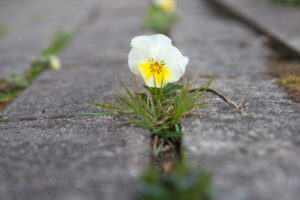
For this new year with new possibilities, think about finding your peace, or maintaining and growing the peace that you’ve already established for yourself.  Peace is the key to so many other components of our lives.  No matter what’s going on around us, we have the ability to cultivate peace and hold it within ourselves.  It won’t always be a simple task, but it is a possibility.  It might even help to think of plants and trees that manage to grow in sidewalk cracks.  Sometimes we have to grow our peace in less than ideal conditions, but it will grow despite the harshest of environments.

So, I wish you all peace in 2023! 

Until next time,

Heather ~Natural Clarity Coaching~ naturalclaritycoaching.com na********************@***il.com Natural Clarity Coaching on Facebook, Instagram, LinkedIn, and Twitter

Self-Care as an investment in personal health and strength

Self-care is something that I make note of in my writing on a regular basis.  Why?  Because it matters…a lot.

“Self-care is a sustainable and holistic investment in our minds and bodies. It includes taking good care of our physical health, most notably by eating healthily, exercising, and sleeping well. But it also entails looking after our minds and emotions, which can take the form of setting time aside for activities that nourish our spirits and learning to understand how we can best replenish our energies” (Schaffner, 2020).

When we make self-care a priority, we also make our health a priority.  Without health, what are we left with?

Self-care is of particular importance when we are interacting with toxic people.  It helps to keep us strong in all ways – mentally, physically, emotionally, and spiritually.  And while it can be incredibly challenging to find time for self-care, with toxic people either demanding all of our attention or finding ourselves too upset or stressed to focus on personal care, carving out even just a few minutes whenever possible can make a major difference.  Some narcissists, for example, create situations where we can become regularly fatigued (as with events that result in sleep deprivation), which weakens us on a holistic level.  They know that their targets are easier to control and manipulate when their defences are down.  So, if we can keep ourselves as strong as possible, we can have a better chance of not becoming absolutely overwhelmed and exhausted, which leaves us unprotected from the whims of disordered individuals.  Also, if we’ve chosen low- or no-contact with a given person or people, we need strength to uphold our boundaries and adjust to and thrive in the changes that we have chosen for ourselves.

No matter who you are or where you are at in your life’s journey, self-care truly is essential.  What self-care looks like for each person – beyond the basics of healthy eating, exercising, and adequate sleep – will be unique.  We need to tune into ourselves to find what soothes our soul and gives us energy.  Once we know what works for us, self-care routines are helpful.  But, as was mentioned above, if regular times for self-care are not currently possible, then fitting it in where we can is the next best option.  A healthy snack, taking a walk, going to bed a few minutes earlier than usual, listening to music, engaging in art of some kind, chatting with friends, playing with pets…whatever it may be that we can take even a few moments to do, it all empowers us and makes an impact.

Until next time,

Heather

~Natural Clarity Coaching~

naturalclaritycoaching.com

na********************@***il.com

Natural Clarity Coaching on Facebook, Instagram, LinkedIn, and Twitter

_____________________________________________________________________________________________________________________________________________

References

Schaffner, A. K. (2020, May 20). How To Practice Self-Care: 10 Worksheets and 12 Ideas. PositivePsychology.com.        https://positivepsychology.com/self-care-worksheets/

Happy Holidays!

To all of the visitors to this website, thank you for stopping by!  And to those who celebrate Christmas, I’m sending out a hearty Merry Christmas to you!  For anyone who’s struggling this holiday season, take a peek at the previous post for some tips.

Until next time,

Heather ~Natural Clarity Coaching~ naturalclaritycoaching.com na********************@***il.com Natural Clarity Coaching on Facebook, Instagram, LinkedIn, and Twitter

Happy Holidays! Here’s some tips to help you get through, especially if toxic people are in the picture

Well, here we go.  Another holiday season is upon us.  While special occasions should be enjoyable, they can be quite the opposite when toxic people are involved.  Be they partners, family, friends, coworkers, etc., some people seem to drag their drama and unpleasantries to every party, gathering, and dinner table when the holidays come around.

As I’ve mentioned in previous posts, if we need/want to attend events that will include narcissists and other difficult people, boundaries are always at our disposal.  That could include avoiding conversations, speaking minimally if we get pulled into any chit-chat, or walking away if we feel the need to do so.  It’s possible to be polite and not make a scene when attempting to avoid contact with someone.  Unless we’d like to make a scene, of course.  In that case, go for it!  Just be true to you, whatever that may look like.  And even if we’re in a room full of enablers (flying monkeys) of the toxic person/people, we can hold our heads high while recognizing that narcissists are very convincing, manipulative people who can pull the wool over some people’s eyes.  But that often changes.  Until then, we can define it as one of those “it is what it is” situations.  In the end, the behaviour of toxic people and their dutiful flying monkeys has absolutely nothing to do with us.  We just happen to be the (often scapegoated) current target of their misery and drama.

We can also choose not to attend events at which the person or people in question may be.  Yes, it sucks to miss out but we need to weigh that against loss of peace and increases in stress levels.

For those of us who are low- or no-contact and have been choosing not to attend events with certain individuals, the little worm of loneliness may try to creep in.  But we can ignore that feeling by keeping ourselves busy with new traditions, hobbies, or making plans for spending time with people who are less challenging to be around.

And above all else, make time for self-care.  Even five minutes can help if that’s all the time we can manage.  Deep breathing, yoga, going for a walk, time with friends, a warm bath…whatever gives us some downtime and relaxation can make a world of difference.  Absolutely every little moment of self-care helps our bodies, minds, and spirits to stay resilient and provides optimal chances for overall wellbeing.

Happy Holidays!  We can do this! 

Until next time,

Heather ~Natural Clarity Coaching~ naturalclaritycoaching.com na********************@***il.com Natural Clarity Coaching on Facebook, Instagram, LinkedIn, and Twitter

Social Determinants of Health and Growing up in a Dysfunctional Family (Possibly with Narcissists)

In my current university program studies, a certain number of electives are required in order to fulfill the requirements of a degree.  Last year, I stumbled across an elective course on the subject of the social determinants of health (SDoH).  It sounded interesting so I decided to take it.  I have since taken two more courses on related subjects on health inequities and health promotions/interventions.  To say that I’m intrigued would be an understatement.

So, if you haven’t already heard of them, the SDoH are:  “the non-medical factors that influence health outcomes. They are the conditions in which people are born, grow, work, live, and age, and the wider set of forces and systems shaping the conditions of daily life” (CDC, 2022).  Further, SDoH are “linked to a lack of opportunity and resources to protect, improve, and maintain health. Taken together, these factors create health inequities— types of health disparities that stem from unfair and unjust systems, policies, and practices, and limit access to the opportunities and resources needed to live the healthiest life possible” (CDC, 2022).

Borrowed from CMHA - Ontario

Borrowed from CMHA – Ontario

To be more specific, SDoH come in many forms:

  • unemployment and job security
  • gender
  • Indigenous status
  • disability
  • housing
  • early life
  • income and income distribution
  • education
  • race
  • employment and working conditions
  • social exclusion
  • food insecurity
  • social safety net
  • health services

Looking at the example of early life, unresolved childhood trauma can result in mental health and/or addictions issues, to name just two.

I think it’s easy to see how growing up (early life)  with, for example, a narcissistic parent could be considered a social determinant of health, encompassing the holistic (whole person) levels of mental, physical, spiritual, emotional, and social health.   These experiences have the strong potential to send us down paths that lead to serious impacts which negatively affect our overall health and wellbeing. There are obviously other SDoH’s listed above that could be linked with a dysfunctional upbringing.

With this knowledge in hand, a strong response as, say, an adult child of a narcissist(s) acquiring awareness of their disordered childhood and onward, would be: educating oneself on narcissism and its far-reaching, negative effects in order to understand the ‘why’ and ‘how’ on a personal level; engaging in regular self-care; accessing professional resources (mental health, coaching, wellness, etc.) to assist in their healing journey; and so on.  Focusing on the hurt caused by a toxic person or people doesn’t typically aid in healthy, positive progress.  But what does help is acknowledging the pain, understanding the mechanisms behind the dysfunctional behaviour and its impacts on us as targets, and then focusing on healing ourselves so that we can find peace and fulfillment in our lives and relationships of our choosing (as opposed to ones we were born into, should we decide we no longer wish to maintain them).

We owe it to ourselves to be resilient and move forward despite what we’ve endured.  Is it an easy task?  Definitely not.  But is it worth it?  Absolutely, 100 percent.  The possibilities for our lives are virtually limitless when we acquire the coping tools to see beyond the effects of the cloud of abuse and dysfunction, and maybe even remove ourselves from its unpleasant influence altogether.  That’s an entirely different topic, though – see previous posts on low contact and no contact.

More on this in future posts.

Until next time,

Heather ~Natural Clarity Coaching~ naturalclaritycoaching.com na********************@***il.com Natural Clarity Coaching on Facebook, Instagram, LinkedIn, and Twitter

Enablers are often abused by narcissists


For many of us – whether we are no contact, low contact, or still involved with our family of origin – witnessing or hearing about a narcissist abusing their enabler will be a common theme.  This could be parents, grandparents, siblings in unhealthy relationships, etc.  When we make choices to protect ourselves from narcissistic abuse, we may also lose our connection with the enabler.  It can feel like a double-whammy and a huge loss.  Although enablers can often seem like accessories to the behaviour of narcissists, let’s take a look at things from their perspective.

Enabling personalities will justify or indirectly support the often harmful behaviour of narcissists.  In most cases, this is unintentional.  It could be the result of the enabler having been raised in a toxic family and feeling that the dynamics are ‘normal’ in adulthood.  And the other main reason can be that the enabler is also narcissistically abused by their partner.  This typically rotates with special treatment in order for the narcissist to keep the enabler hooked.  In essence, though, going along with the narcissist creates the least amount of suffering for the enabler.  It’s not right or fair to anyone involved, particularly scapegoated children of any age, but it’s typically the best way for enablers to keep some semblance of peace in their lives.  While we may have high expectations of our parents, they are only human in the end.

So while looking at an enabler from the perspective of also being a target of the narcissist can sometimes be a difficult task, it can also be helpful for scapegoats to be aware of it, even if just to understand that their seemingly complicit behaviour isn’t personal against us.  This is definitely not an excuse for their being an often unwitting accessory to toxic actions, or at the very least a silent onlooker, but it’s a valid explanation.  Enablers are essentially programmed to go along with dysfunction.  In my experience and in hearing the experiences of many others, enablers suffer, too.  I’ve heard stories of enablers facing health challenges and being met with a ‘partner’ (using that term lightly) who has zero empathy, care, or concern.  In fact, the narcissist may even complain about how these health issues are inconvenient for them.  Despite the enabler’s loyalty to this person, they rarely or never see any reciprocation.  Narcissists cause suffering for everyone around them, unless we find ways to distance ourselves from them.  And when we do take steps to protect ourselves, we may then be witness to ongoing abuse against enablers.  We may even wish we could rescue them.  But, unfortunately, protecting ourselves against narcissistic people is a personal decision that needs to happen for each of us independently.  And trying to force anything can bring down a bigger storm of abuse on enablers.

Although any kind of ties with narcissists are never just, uncomplicated, or painless, it’s helpful to lessen the sting if we don’t view an enabler as part of a ‘team’ working against us with a toxic family member.  In many cases, as I’ve mentioned, enablers have grown up in abusive families, only to wind up with more abusers due to the patterns of dysfunction that they think are normal and familiar.  It’s sad, really.

Until next time,

Heather ~Natural Clarity Coaching~ naturalclaritycoaching.com na********************@***il.com Natural Clarity Coaching on Facebook, Instagram, LinkedIn, and Twitter

Special Occasions and Toxic Families

With Thanksgiving underway in the U.S. today, there will be many people attempting to deal with difficult situations.  This could be in the form of interacting with toxic family members or experiencing loneliness from being either no contact or ignored.  There’s no doubt that all of these situations are incredibly challenging and painful.  The big question is: what’s the best way to deal with upsetting contact and/or loneliness, especially during special occasions?

The answer to that question is not a one-size-fits-all solution.  Each individual’s situation is unique, as is where they currently are in their journey.  So, as a result, there is no perfect answer.  It comes down to knowing that we have the right and ability to do what works best for us as individuals.  That may mean expressing boundaries to toxic family members.  It may mean staying home or spending time with other people.  There are a multitude of possibilities.  But in the end, what is important is that we do what works best for us.  That looks different for each person.  For some, it may mean maintaining the status quo because conflict isn’t on the books for us right now.  For others, it may look like taking a stand and laying down lines that we will enforce at all costs.   For others still, peace and contentment may include the choice to simply stay home and avoid the toxicity.  And all of those are perfectly fine if it fits with our current needs and goals.  One tactic that rarely works in creating or keeping peace within ourselves is doing what we think will make others happy.  Most of us who have grown up in dysfunctional family systems have been trained to focus our energy primarily on the happiness of others, rather than tending to our own lives.  So it helps to be aware of this tendency and keep its potential influence in mind when we’re making decisions.

No matter what, just know that doing what is right for any of us, at this particular point in time, is the most important component.  There’s no rulebook or guides to follow.  There is no comparison necessary.  Everyone’s journey is unique.  We need to live the life we’ve been given, to the best of our abilities.  Sometimes things get confusing and difficult, but if the focus is on peace and our best interests, then we’ll find our way.

Sending out vibes of positivity to each and every one of you, wherever you may be.

Until next time,

Heather ~Natural Clarity Coaching~ naturalclaritycoaching.com na********************@***il.com Natural Clarity Coaching on Facebook, Instagram, LinkedIn, and Twitter

Emotional Loneliness in Abnormal Environments

As children in dysfunctional families, particularly with narcissists in the mix, emotional loneliness can be a strong factor in our lives.  We may feel very alone and abandoned, and, in many cases, this creates feelings of something being ‘wrong’ with us.  In turn, we may use unhealthy coping mechanisms to deal with all of it.

This emotional loneliness comes from being in an abnormal environment where sympathetic interest in us is lacking.  We may be told we’re too sensitive or too emotional.  Or the unspoken (or sometimes spoken) message might be that we don’t matter enough to our family for them to even take the time or make the effort to hear us or provide any support or comfort.  We’re usually conditioned to believe that the only voices that matter come from our caregivers and that they’re the only ones who are permitted to have and express all manner of emotions.  It’s a lonely and emotionally cut-off place to be, without a doubt.  This is abuse and it creates interpersonal trauma.

But does feeling this way mean there’s something wrong with us?  No.  Not in any way, shape, or form.  The way we feel is a completely normal reaction to an abnormal environment.  In most cases, our caregivers simply weren’t emotionally mature enough themselves, for whatever reason, to offer emotional support to anyone else.  We feel the effects of that void in the form of emotional loneliness.  It’s like being completely alone on an island.  As humans, it’s absolutely normal to feel this way in response to a lack of healthy contact and support from our caregivers.  It doesn’t mean there’s something wrong with us.  The root of these feelings is people who aren’t there for us the way they should be.  And we’re having normal human reactions to being starved of those connections and experiences.

So, how do we overcome emotional loneliness?  First of all, be aware that it won’t happen overnight, but it’s worth taking the time to heal.  We need to begin by repairing our conditioned reality.  Dysfunctional families are not there for one another in healthy and supportive ways.  If we’re looking at narcissistic parenting, for example, narcissists, with their fragile and needy egos, have zero ability or desire to attend to anyone but themselves, and they expect everyone around them to make them the center of the universe as well.  Once we see that, things begin to make sense.  “Hey, there’s nothing wrong with me!  I was reacting normally to an abnormal environment.”  Then we need to move on to the next step, which is to learn to love ourselves.  It sounds cliched, for sure.  But it helps us to heal.  This can look like building compassion for and trust in ourselves, giving ourselves the unconditional love that we deserved but rarely or never received as children, comforting and hearing our inner child, learning to silence our internal critic and the guilt and shame that has been unjustly forced on us, and exercising regular self-care.  We need to develop healthy, non-toxic relationships with self and with supportive others in order to heal ourselves.

Until next time,

Heather ~Natural Clarity Coaching~ naturalclaritycoaching.com na********************@***il.com Natural Clarity Coaching on Facebook, Instagram, LinkedIn, and Twitter

« Older posts Newer posts »