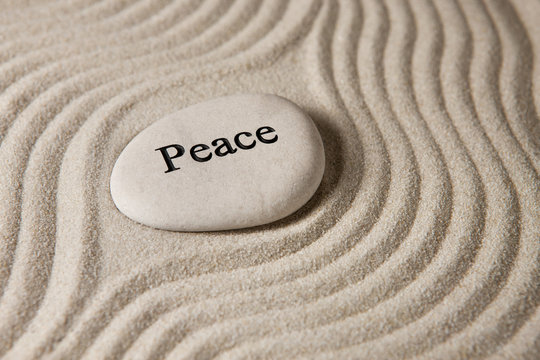
Maybe we went no contact with the narcissist. Or low contact. There may simply be new boundaries that we won’t allow to be crossed. Whatever the case may be, less time interacting with narcissists or other toxic people often amounts to more peace and space in our lives.
How do peace and space help? First of all, we can step back and just breathe. And we can view ourselves and our lives without the cloud of abuse hanging over us. Peace allows for clearing the mind of abusive chatter. We can see things more clearly, including ourselves. And the more space and peace we experience, the more strength we develop and the less tolerance we have for abusive behaviour.
Will peace and space feel strange off the start? Definitely. When we’ve been in any sort of abusive relationship (from family to partners, co-workers, friends, etc.), we don’t have either of those things. They are unfamiliar. So when they come into our lives, it can be unsettling at first. But if we sit with them and learn to appreciate space and peace, they can take us to beautiful and empowering places. We can learn to love ourselves, to see red flags and toxic patterns, and to take steps to protect ourselves from future abuse.
The longer we have peace and space in our lives, the more clearly we will see behaviours that don’t mesh with them. We’ll protect them because we know how important they are to our wellbeing. And, most importantly, we’ll grow to recognize that we deserve to be treated with respect and that we are not to blame for the issues of disordered people.
Here is a link to resources for finding peace after abuse: peace after abuse
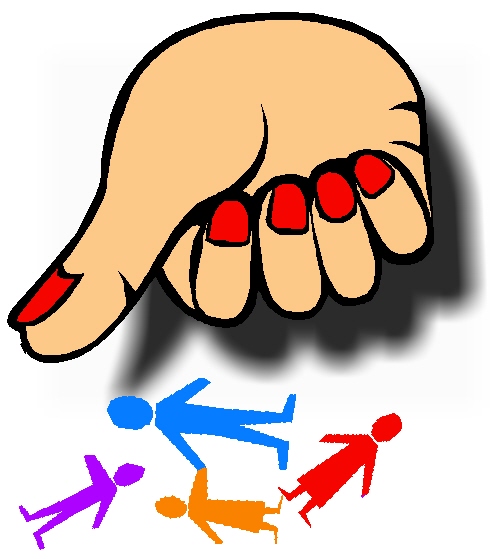
One thing many of us find common with narcissists is that they don’t like seeing others express emotion, especially their scapegoat(s). Why? Because they can’t control other people’s emotions. They have no way of predicting or managing whether tears might turn to anger or any other emotions. And they could lose people (such as enablers or flying monkeys) who typically ‘side’ with them — even temporarily — if empathy is felt and expressed by others towards the scapegoat.
The narcissist needs the scapegoat to be under their thumb at all times so that they can confidently manage the family/relational dynamics and maintain their position of power. However, the rule of no emotions, of course, does not apply to them. Narcissists love to show emotion when it suits them, and they can turn on the emotional drama when they need to manipulate a situation. Yes, in their opinion, they’re allowed to show emotions — fake or real — and everyone needs to accept it and take care of them, but they don’t tolerate it well from anyone else.
As is typical, narcissists don’t want anything or anyone in their environment that might be unpredictable, uncontrollable, or liable to impact their power. When scapegoats show emotion, it’s common for narcissists to respond with anger, disgust, or even the silent treatment in an attempt to shut it all down as quickly as possible.
Remember, it’s okay to feel. No one has the right to tell anyone how their feelings should look, or that they’re not allowed to express their feelings at all. Certainly, sometimes it’s safer to avoid expressing emotions in front of people who are known to invalidate them or to become angry or violent, but the key is to not allow that to become a habit throughout all areas and with everyone in our lives.
We humans are thinking, feeling beings. We have the right to think and to feel in whatever ways work for us. Our emotions belong to us.
Narcissists are definitely thieves. Of time, people, things, money, and the list goes on.
As far as time goes, narcissists steal our time by wasting it on them and their inauthentic selves.
Narcissists cause damage and loss of relationships by stealing people from us after launching smear campaigns.
They steal our things and may even take from our loved ones.
And they often abuse us financially.
Yes, narcissists are thieves. So, how do we protect ourselves from this behaviour? If we can avoid narcissists in the first place, that’s the best plan. But if we’re already with them or have recently left them, we need to put up boundaries and do our best — depending on the situation — to either accept the loss, or attempt, within safe reason, to reclaim our property or funds. It comes down to personal choice. If it matters enough to us, we can also try to mend broken relationships caused by the narcissist. And we can’t get back our time but we can make the loss less painful by ensuring that no one is able to steal it again.
Are you interested in being part of the movement to raise awareness about using intuition to its fullest, identifying red flags, and understanding toxic personalities (including narcissistic personality disorder)? Do you want to consult with and be a support system for people who are trying to learn, heal, grow, and thrive after narcissistic abuse and other forms of damage by disordered individuals? Would you like to empower yourself and others to thrive and live a peaceful, healthy life?
Stay tuned in the upcoming weeks for the launch of a new online program that could change your life and the lives of those with whom you interact! We’re looking forward to sharing it with you.
Have you ever wondered if there’s science behind narcissistic behaviour? Well, read on, because there most definitely is.
People who exhibit narcissistic behaviour have often been exposed to traumatic events or experienced abuse, neglect, or abandonment in childhood. It’s also possible that genetics play a role for some people as having a close relative — such as a parent or sibling — has the potential to increase the risk of developing narcissism.
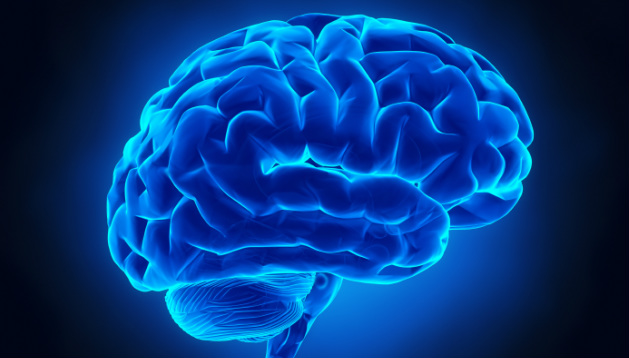
Narcissistic personality disorder (NPD) is a disorder of the brain. According to research, people with narcissistic personality disorder have reduced gray matter volume in areas of the brain related to empathy and increased activity on baseline images in brain regions associated with self-directed and self-absorbed thinking1.
Co-existing mental health conditions often go along with NPD, including anxiety, mood disorders, and substance abuse.
There is also research that suggests an increased risk for suicidal behavior and a higher incidence of dying by suicide as compared to other personality disorders.
People with NPD have an increased risk of cardiovascular disease and gastrointestinal distress. In terms of behaviour, they are more likely to have a criminal record, history of violence, or to have inflicted pain or suffering on others. Furthermore, some research has suggested that due to the problems in brain areas associated with narcissistic personality disorder, people with this condition may have an increased risk for developing dementia as they get older1.
Narcissistic personality disorder is not a choice. That is in no way a defence of the behaviour that goes along with it, but it is an explanation for it. And when we’re on the receiving end of narcissism, we need to keep that in mind. It’s healthiest not to take it personally. When we know there are scientific reasons behind it, that can take away the desire to understand why someone specifically did this or said that. It’s a disorder, and we benefit and are empowered by knowing that.
So, to start off, you might be wondering exactly what imposter syndrome is. Well, it’s generally described as a psychological pattern in which an individual doubts their own accomplishments and has a persistent, internalized fear of being exposed as a fraud, despite evidence of their competence and success. There may be a feeling of not knowing what we’re doing, say, in a work environment, even though it feels like everyone around us is an expert. And we may put our life’s successes down to luck, timing, or even unintentionally deceiving others.
Where does this come from? Growing up as a scapegoat in a narcissistic family environment puts us in a space where our accomplishments either go unnoticed/are ignored/are denied, are criticized and diminished, or are said to be undeserved and brought about through some form of deceit on our part. Or maybe all of the above, depending on the mood the narcissist may be in on any given day. These dysfunctional attitudes will obviously wear on a person, commonly to the point of losing self-concept and eventually feeling like a fraud who has no right to success, let alone receiving any acknowledgment of it from anyone. Enter imposter syndrome.
Understanding and addressing impostor syndrome often involves recognizing the negative thought patterns and beliefs that contribute to these feelings and working to reframe them. It can be beneficial to seek support from friends, trusted family members, or a mental health professional to help manage and overcome these feelings of inadequacy. Our internal voice needs to change from the biases and lies of dysfunctional people to one that is full of self-acceptance and self-love. It won’t happen instantly but it’s more than possible to get to a better place.
In the end, we need to remind ourselves that we all have talents, skills, and other positive traits and abilities that are worthy of our pride and belief. And we have the right to accept compliments or even accolades, and to feel as though we 100% are deserving of them.
We need to live our lives and SHINE the way we were intended to. Believe in yourself and who you are, and don’t let anyone dim your light.
As scapegoats or black sheep within our family of origin, we need to not only contend with a difficult narcissist or other form of disordered parent, but we typically also have an enabling parent in the mix. The toxic parent relies on their enabler mate to feed their ego, “side” with them, and defend them and their dysfunctional behaviour to the ends of the earth.
So, is the enabling parent also abused by the narcissist/abusive individual? Generally, yes. For instance, enabler parents who choose to side with a scapegoat child will pay a price for it. It could be verbal, emotional, or even physical abuse. This might be in the form of, for example, berating or even the silent treatment. In order to keep some semblance of peace, enablers need to tow the line with their abusive partner.
What does that mean for the scapegoat of the family? It means that we can’t truly depend on either of our parents to be solid role models and support systems for us. And the abandonment and disappointment that is experienced when the enabler lets us down can sometimes feel as bad (maybe worse because we know they have the potential to do better) as the abuse from a narc or other type of abusive parent.
While it may make sense to us that our enabler parent is as desperate for peace as we are, it’s also a difficult pill to swallow when they let us down time and time again in order to pacify the disordered parent. They’ll side against us, fail to defend us, and follow suit with the abuser, no matter how unfair or ridiculous the situation may be. As a scapegoat, this may lead to feelings of loneliness, depression, and trauma, among others.
It will without a doubt be difficult if we decide to let go of the hope that our enabler parent will ever be there for us when we’re being mistreated by the other parent. It’s tough to give up on hope with someone we love. And there’s always a feeling of, “if others would just take a stand with the narc/abuser, maybe things would be different”, which is a normal reaction. But dysfunctional family systems don’t work that way. Narcissists control and manipulate. And some people get pulled into it and, over time, it becomes their new normal. Abusers need a scapegoat to point fingers at and to avoid their own accountability or injury to their fragile ego, and their supporters will typically go along with it in order to not be the person having the finger pointed at them.
To all the scapegoats and black sheep, just know that we’re strong enough to cope with any and all of it. In their own way, relationships with enablers can be as emotionally painful as the ones we have with abusers. But we can and will get through it. Find other support systems in friends, extended family, support groups, professional counsellors/coaches and so on. Engage in self-care. Learn to love and trust ourselves and know that we deserve love and respect from our family.
In the end, it’s possible to love a dysfunctional family (if we want to) but still live our lives at arm’s length from them. We can be ourselves, love ourselves, take care of ourselves, and have peace in spite of all of it.
This is a topic that I’ve written about before. But there’s no doubt that it’s an important subject that bears repeating.
In the simplest of terms, the experience of being abused by a narcissist or other toxic individual – particularly as a scapegoat or black sheep – absolutely SUCKS.
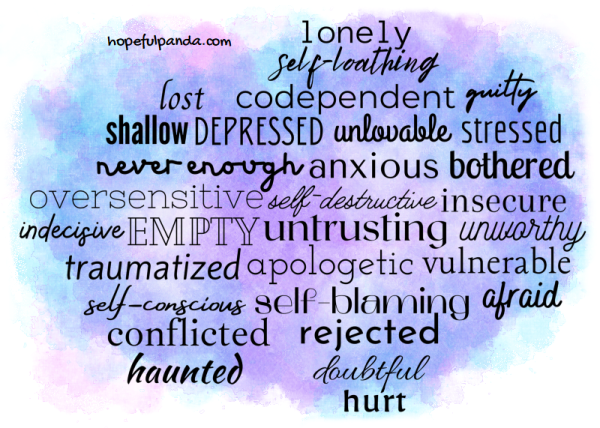
The immediate, in-the-moment effects can range from shame, guilt, and fear to self-esteem and self-image issues as well as loneliness and depression, with so many more in the mix. The long-term, more insidious effects are the ones that can become a part of our lives in ways that are not all that apparent. Patterns of thinking and behaviour that emerge and we don’t question them because they just…well, they just are.
Long-term effects can grow from the in-the-moment examples listed above to become well-rooted in our psyches. On top of that can be trust issues, anxiety, relationship problems (often being attracted to other abusive personalities), self-doubt, self-sabotage, lack of self-worth and self-respect, C-PTSD, and a wide array of others.
This type of abuse slides into the very core of who we are and takes up residence there, often without our conscious knowledge. And then it negatively influences our self-concept and how we relate to the world around us. It’s common for the voices of our abusers to set up shop in our heads. After awhile, they don’t even need to do their work of putting us down in real time because we’ve been conditioned to criticize and sabotage ourselves at every turn. And, as is common, many of us unknowingly seek out relationships as we become adults, with people – friends, romantic partners, business partners – who continue on with the work of our dysfunctional families of origin or other abusers.
Borrowed from hopefulpanda.com
In any event, the damaging effects of our earliest abusers tend to keep rolling throughout our lives. Don’t get me wrong, we may still have a narc parent in our lives who continues to conduct their nonsense routine on us, but it’s typical for us to keep the tradition going in our own minds as well as bring in new abusers along the way. But it can’t continue or have the same type of impact once we raise our awareness.
What do I mean by raising our awareness? Listening to and trusting our inner voice is a great start. For instance, how do I feel around this individual? Put aside everything else and really allow those true feelings to surface. It’s likely that there will be people who are setting off inner alarm bells if we’re really paying attention. Like, “I feel completely shitty and worthless around this person”! Then, it’s helpful to think about red flags like gaslighting, smear campaigns, silent treatments, breaking trust, superiority attitudes and condescension, toxic communication, and so on (see previous posts and/or the online course offering on intuition and red flags). Are they there, those red flags blowing in the wind? Can we take off our blinders and really see them for what they are?
And if our inner voice has spoken and we’ve finally heard it, and the red flags are popping up, then what? Well, that’s an individual choice. Some people may choose to create boundaries, such as telling an abusive individual that they won’t tolerate their behaviour, etc. Or they may use the grey rock method, which involves being unresponsive, disengaged, and unemotional with someone in an effort to make them lose interest in us. Do these methods work with abusive people? Occasionally. But it generally doesn’t work well with narcissists and other really toxic entities because they’re persistent and determined. If you’re their chosen scapegoat or black sheep, they want to hang onto you because it benefits their ego. So, there’s always low contact or no contact.
But in the end, regardless of which direction we go, the most crucial part of the awareness equation is self-help and/or professional help. Those feelings and self-concepts that were created within an abusive environment are packed away inside us. They may not be obvious but they’re in there. And when we commit to eradicating them from our lives – the biases, attacks on our character, labelling, judgments, assumptions, lies – it’s more than possible to turn everything around. When we see the abuse for what it is – someone else’s attempt to feel better about themselves at our expense – then we can take steps to let it all go.
My words to you, personally, are: It’s not you. It was never you. Let it all go and allow yourself to be who you were meant to be, free from abuse. You deserve to have peace and to love yourself.
Without a doubt, being in the role of scapegoat – regardless of the relationship within which it occurs – is absolutely undesirable. And unfair. It’s truly not fair for anyone to be cast into the scapegoat role. But, unfortunately, it happens all the time.
Let’s take a look at some of the main reasons why people are chosen as scapegoats within families, as an example.
Behaviour – If a parent views a child as making mistakes – say, getting into issues at school – it can feed into negative expectations.
Intelligence – Some parents hold intelligence in unreasonably high regard and may harshly judge a child who they feel isn’t measuring up to their standards.
Looks – From hair to other physical features, a parent may take issue with a child who doesn’t have the appearance that they feel is preferred.
Reminding a parent of another scapegoat – A parent who grew up with a sibling who was the family scapegoat (yes, dysfunctional families often follow in the footsteps of previous generations) may see similarities of that person in their child and then place them in the same scapegoat role.
Gender – A parent who has major issues surrounding gender biases will be more likely to select a child as a scapegoat if they happen to be a member of a gender against which they hold these biases.
From here, it’s important to look at some of the tell-tale signs that a person is being scapegoated.
Gaslighting – This involves denying reality to another person so that they will question themselves and their sanity.
Manipulation – Just as it sounds, manipulation refers to manipulating someone in an unscrupulous way.
Triangulation – In triangulation, a parent will bring another person into the mix with themselves and their scapegoated child, and they will often have the third person do their dirty work for them. For example, they will tell the third person (often another – enabling – parent) typically untrue things about the scapegoated child so that this individual will go to the scapegoated child with accusations and complaints about them. This not only damages other relationships within a family, but it leaves the scapegoat feeling outnumbered and picked on.
Always Being Cast in a Negative Light – Here, the scapegoat is always being judged and treated as though they are doing something wrong.
Successes Aren’t Recognized – Not only is the scapegoat cast in a negative light, but their successes often go unrecognized or are diminished. Some parents may even suggest that a scapegoat child is unworthy of the success they have achieved (in school, work, relationships, etc.).
Feeling Ignored – Scapegoats will often feel ignored within a family. This is often because toxic parents will use the silent treatment in order to control situations. This involves dismissive and/or angry body language and behaviour that involves ignoring the scapegoat at all costs.
Feeling the Need to Justify Everything – Scapegoats will feel as though they need to justify every decision they make in their own lives and that they aren’t really free to make independent decisions without fear of conflict.
Finally, here are some of the effects of being the family scapegoat.
Codependent Behaviours – In this area, people change their own behaviour in order to manage other people’s emotions. For example, a scapegoated child may behave in certain ways in order to avoid angering a toxic parent or the dysfunctional family system in general.
Tendency to People-Please – Just as it says, scapegoats often people-please in order to keep everyone around them content and to avoid conflict. They will say ‘yes’ to things they truly don’t want to do, for example.
Low Self-Esteem – Scapegoats – for obvious reasons – typically struggle with low self-esteem and lack of confidence. Being targeted and blamed for years by one’s family creates negative internal viewpoints.
Trauma – Childhood trauma is a very real possibility for scapegoats. This can lead to C-PTSD (Complex Post-Traumatic Stress Disorder), which is a result of repeated and prolonged exposure to traumatic events.
Conflict – Interpersonal conflicts erupt within dysfunctional families, usually between the scapegoat and other family members. This drives an even bigger wedge into already challenged relationships.
Self-Harming – Self-harm and self-sabotage can become ways that a scapegoat attempts to cope with the pain of isolation and constant blame, even if they aren’t aware of why they are engaging in these behaviours.
Patterns in Future Relationships – Scapegoats may repeat patterns of being scapegoated in their future relationships by unknowingly seeking out toxic partners. Other family members (such as siblings) may seek out scapegoats because that is the dynamic they are accustomed to living in.
This brings us to ways to cope with the fallout of being a scapegoat.
Positive self-talk
Acknowledge what you have experienced
Learn to set healthy boundaries
Practice self-compassion
Avoid falling into the ‘victim’ mindset
Journaling
Develop friendships
Additionally, there are various types of therapy or life coaching available. Self-paced, online courses – like the ones offered here at Natural Clarity Coaching – can also be a great self-help resource.
In the end, yes, being a scapegoat is an unfair role to be cast in. It is damaging on many levels and often plays out in other relationships. But there are ways to cope and heal. Being scapegoated doesn’t determine who we are unless we allow it to do so. It’s more than possible to step out of the confines of that role, heal ourselves, and be who we are meant to be.
Until next time,
~Heather~ Natural Clarity Coaching
na********************@***il.com
Natural Clarity Coaching on Facebook, Instagram, LinkedIn, and TikTok