Tag: enablers (Page 1 of 2)

When Special Occasions Are Challenging

Hi all,

I’ve been busy working on various projects and realized it had been a bit since I wrote a post.

So, for those of us who are estranged from or not looking forward to spending time with a dysfunctional family or certain members, special occasions come with mixed and challenging feelings. We may even dread them. If no-contact has been the choice, then, for the people who are not part of our life, there won’t be any celebrations of mother’s or father’s day, to name a couple that take place this time of year. On the other hand, if low-contact or interactions with strong boundaries are the current way of things, then dealing with these occasions will likely be happening.

Regardless of a person’s current situation with family – beyond dysfunction, some people’s parents have passed or they’ve lost children, for example – occasions like mother’s and father’s days can be difficult.

What are some ways of getting through, whether it’s full no-contact or a tense family gathering?

  1. Prepare for it mentally. Get plenty of sleep beforehand, hydrate, be realistic about what you might encounter and how you will deal with it (ie. deep breathing, keeping conversation and emotion to a minimum, leaving if necessary, finding other things to do alone or with other family or friends, etc.).
  2. Know your boundaries and hold to them. Toxic people love to push boundaries and it helps to be prepared for that eventuality, whether it’s happening in real time or there’s fall-out after the fact. Enabling parents and flying monkeys come out of the woodwork more often around special occasions, too. The simple fact of the matter is that each of us has the right to decide who can be in our life, and if someone is toxic and unhealthy for us, then we have the choice to disallow their access to us. If they don’t like it and if they send their lackeys to do their bidding, so be it. We can still hold strong. If it’s protection of ourselves and/or our children or other loved ones, that’s what we need to focus on rather than all of the noise and smear campaigns that come from toxic people and their army of yes-people when they don’t get their way.
  3. Don’t stick around or allow guests to stay in your home if there is a need to bring festivities to an end. Respect your needs and expect respect from others, particularly if they’re in your home.
  4. Remember to celebrate yourself if you’re a parent or for other celebratory events! These occasions aren’t only about other people; they apply to you, too. Growing up in a dysfunctional family may have created the impression that only certain people matter enough to be celebrated; bury that inaccurate narrative in a deep hole, fill it in, and then add some cement over the top!
  5. Go for a walk or have a relaxing bath after all is said and done – whatever works for you. Self-care can work wonders, and it doesn’t take much to have a big effect.
  6. If unpleasant words were spoken to you by or on behalf of a toxic person, try not to ruminate over them. Consider the source, allow yourself to see the dynamics behind the words, and then let them go and don’t give them any further energy.

Remember that if you were once a scapegoat/black sheep for your family of origin and you have stepped out of the role, remaining family members will typically want to pull you back in so that the status quo can be continued. Their dynamics will be off and they want to right them again. Special occasions are always a great opportunity for them to put things into action. That doesn’t mean that the once-scapegoat needs to sacrifice themselves for the sake of the greater good. Not at all. Scapegoats have the right to take their lives back, find peace, and keep it that way. Going back to dysfunctional situations for the sake of making other people happy (and, honestly, they aren’t “happy”) isn’t fair or healthy. If the situation had been good, we never would have left. Always keep that in mind. And, sadly, most toxic people and their enablers and golden children don’t change for the better. Going back into the fold won’t change anything. All it does is undo personal progress and cause stress and emotional struggles. It’s always best not to allow special occasions to pull us back in to a space that we thought long and hard about leaving in the first place.

No matter what this coming weekend looks like for you, know that you’re not alone and you’re stronger than you know.

Until next time,

Heather ~Natural Clarity Coaching~ naturalclaritycoaching.com na********************@***il.com Natural Clarity Coaching on Facebook, Instagram, LinkedIn, TikTok, and Twitter

New Online Program Being Created

Hi All,

Hope this finds you well.  Thanks to everyone who has recently joined the mailing list and to the increasing numbers of people who are touching down on the website.

Just letting you know that I’m working on a new program to be offered online.  I’ll post an announcement once it’s up and running.  I think it will be a beneficial program, and I’m looking forward to launching it in the next few months.

Until next time,

Heather ~Natural Clarity Coaching~ naturalclaritycoaching.com na********************@***il.com Natural Clarity Coaching on Facebook, Instagram, LinkedIn, and Twitter


Difficult Realizations

(Just a note to start off with.  As promised, more to come on self-acceptance (see previous post) in an upcoming post.)

Anyone who reaches an awareness of the toxicity of someone in their life – be it a parent, sibling, significant other, etc. – has to have experienced a major realization at some point.  That a-ha! moment where everything (months, years, or even decades) suddenly makes sense.  “Oh, wow.  My Mom behaves like a narcissist!” or “My best friend of 10 years has been plotting to steal my partner all this time!”  Something will trigger us to see what’s really been going on.  An epiphany of sorts.

For many of us, this new reality may become crushingly clear.   It could come in the form of suddenly realizing that not only has, for example, a parent not authentically supported us throughout our lives, but they have actually been actively creating and maintaining a negative narrative in their minds about us for years.  And, beyond that, they have spread this narrative to others.  Maybe we’ve been unjustifiably portrayed as stubborn, selfish, difficult, unintelligent, overly sensitive, lazy, or unable to successfully run our own lives.  And there have likely even been occasions when we have spoken up for ourselves when subtle insinuations to these narratives have been made, only to realize that no one bothered to truly hear a word we said and simply went forward as though we had never spoken.  Why?  Because they’re more interested in keeping the narrative alive, for whatever reason.  The whole dynamic of toxic people and their enablers or other people they’ve manipulated is typically a strong one, and, in the end, people will believe what they want to believe, regardless of facts.

Let’s take a closer look at this component of someone spreading false narratives about us and those on the receiving end believing what they want to believe, typically at the urging of a toxic person or people.  Let’s face it: if the person spreading falsehoods about us happens to be a parent, many people would simply assume it must be true.  Especially those who are not well-versed in toxic behaviours within families, for example, and the mechanisms of scapegoating.  And that can be a tough pill to swallow, when you can’t understand how someone could believe something so absolutely inaccurate about you.  But, really, anyone who has their head on straight would know better than to accept any narrative about someone without hearing what that individual has to say.  And they would also have the option to avoid judgment and simply disregard the information altogether.  Where does that leave us, though, when we become aware that not only has someone we may love and trust (such as a parent) been fabricating stories about who we are, but that they’ve spread it to others who are taking it at face value?  It leaves us with the opportunity of finding the strength to embrace what our truth is while acknowledging and accepting that any number of factors and variables are at play around us at any given time.  And that we don’t need to JADE – Justify, Argue, Defend, Explain – ourselves to anyone if we choose not to do so, especially about who we are as people or regarding our own lives and the choices we make.  If someone doesn’t know who we are … who we really are as a person … then that’s their issue, not ours.   If they choose to believe someone’s false narrative about us, that’s their prerogative.  In the end, other people’s opinions and beliefs about us don’t have any bearing on who we genuinely are.  It may disrupt relationships that we thought were deeper, but that’s nothing we can’t survive.  Actually, isn’t it better to know than to go along thinking people have our back when they really don’t?  I think so.

In the end, these realizations of toxic dynamics in our families and other relationships can be upsetting, disappointing, and hurtful.  Sometimes they’re traumatic.  Believing that someone has always had our best interests at heart and then finding out that it was anything but, can be gut-wrenching.   But we are strong enough to pick ourselves up, dust ourselves off, and move forward.  Yes, it can be challenging but, in the end, we’re stronger for the lessons we’ve learned and the empowerment, awareness, and knowledge we’ve gained.

Until next time,

Heather ~Natural Clarity Coaching~ naturalclaritycoaching.com na********************@***il.com Natural Clarity Coaching on Facebook, Instagram, LinkedIn, and Twitter

Accepting Yourself

Toxic people often try to make others feel “less than”.  Why?  Because it makes them feel superior.  It gives them someone to criticize and point fingers at.  It protects their fragile egos.

At the heart of what we need in order to be immune from the tactics of toxic people is acceptance.  Acceptance of ourselves.  When we accept ourselves – positives, flaws, all of who we are –  we empower ourselves.  If we’ve accepted (and maybe even embraced) who we are, then what others say is less likely to have a negative impact on us.  Narcissists, flying monkeys, enablers…none of them will affect us on that level.  We know who we are and that’s that.

Learning acceptance of oneself can seem like a daunting task at first.  But it gets easier the more we engage in it.  In an upcoming post will be some suggestions for seeking out and putting into practice acceptance skills.  There’s no one-size-fits-all approach because each of us is unique.  But it’s possible to find what we need and make it a way of life.  More in the next post.

Until next time,

Heather ~Natural Clarity Coaching~ naturalclaritycoaching.com na********************@***il.com Natural Clarity Coaching on Facebook, Instagram, LinkedIn, and Twitter

New Year, New Possibilities for Peace

I’m a little late for a New Year’s post, but here it is in the spirit of January 1st.

My wish for everyone, especially those negatively affected by narcissists and other toxic individuals, is that they find and/or maintain a life filled with peace.  Peace can permeate other layers of our lives and make everything else better, or, at the very least, somewhat easier.  How we attain peace will look different for each person.  But it’s a possibility for everyone, no matter how challenging things may be at any given moment.

For this new year with new possibilities, think about finding your peace, or maintaining and growing the peace that you’ve already established for yourself.  Peace is the key to so many other components of our lives.  No matter what’s going on around us, we have the ability to cultivate peace and hold it within ourselves.  It won’t always be a simple task, but it is a possibility.  It might even help to think of plants and trees that manage to grow in sidewalk cracks.  Sometimes we have to grow our peace in less than ideal conditions, but it will grow despite the harshest of environments.

So, I wish you all peace in 2023! 

Until next time,

Heather ~Natural Clarity Coaching~ naturalclaritycoaching.com na********************@***il.com Natural Clarity Coaching on Facebook, Instagram, LinkedIn, and Twitter

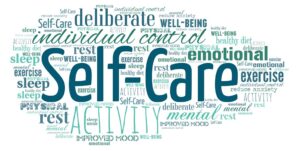
Self-Care as an investment in personal health and strength

Self-care is something that I make note of in my writing on a regular basis.  Why?  Because it matters…a lot.

“Self-care is a sustainable and holistic investment in our minds and bodies. It includes taking good care of our physical health, most notably by eating healthily, exercising, and sleeping well. But it also entails looking after our minds and emotions, which can take the form of setting time aside for activities that nourish our spirits and learning to understand how we can best replenish our energies” (Schaffner, 2020).

When we make self-care a priority, we also make our health a priority.  Without health, what are we left with?

Self-care is of particular importance when we are interacting with toxic people.  It helps to keep us strong in all ways – mentally, physically, emotionally, and spiritually.  And while it can be incredibly challenging to find time for self-care, with toxic people either demanding all of our attention or finding ourselves too upset or stressed to focus on personal care, carving out even just a few minutes whenever possible can make a major difference.  Some narcissists, for example, create situations where we can become regularly fatigued (as with events that result in sleep deprivation), which weakens us on a holistic level.  They know that their targets are easier to control and manipulate when their defences are down.  So, if we can keep ourselves as strong as possible, we can have a better chance of not becoming absolutely overwhelmed and exhausted, which leaves us unprotected from the whims of disordered individuals.  Also, if we’ve chosen low- or no-contact with a given person or people, we need strength to uphold our boundaries and adjust to and thrive in the changes that we have chosen for ourselves.

No matter who you are or where you are at in your life’s journey, self-care truly is essential.  What self-care looks like for each person – beyond the basics of healthy eating, exercising, and adequate sleep – will be unique.  We need to tune into ourselves to find what soothes our soul and gives us energy.  Once we know what works for us, self-care routines are helpful.  But, as was mentioned above, if regular times for self-care are not currently possible, then fitting it in where we can is the next best option.  A healthy snack, taking a walk, going to bed a few minutes earlier than usual, listening to music, engaging in art of some kind, chatting with friends, playing with pets…whatever it may be that we can take even a few moments to do, it all empowers us and makes an impact.

Until next time,

Heather

~Natural Clarity Coaching~

naturalclaritycoaching.com

na********************@***il.com

Natural Clarity Coaching on Facebook, Instagram, LinkedIn, and Twitter

_____________________________________________________________________________________________________________________________________________

References

Schaffner, A. K. (2020, May 20). How To Practice Self-Care: 10 Worksheets and 12 Ideas. PositivePsychology.com.        https://positivepsychology.com/self-care-worksheets/

Scapegoats of Narcissists: Abused and then taking the blame for the abuse

A key feature of narcissists is their need to create a scapegoat (or, sometimes, scapegoats).  Scapegoats are the fall guys for toxic people.  Narcissists: “Our family has problems…the scapegoat caused all of it”…”I’m having a bad day at the office…the scapegoat is at fault”.  Obviously they wouldn’t use the term “scapegoat”.  Replace that with actual names and you’ve got it.

Anyone who is a scapegoat will have experienced narcissistic abuse (put-downs, endless criticisms, regular pointing out of alleged flaws, being unjustifiably blamed for everything, sometimes physical abuse, and so on).  This can occur anywhere – within families, romantic relationships, or within workplaces.  And its purpose is to keep the heat off the narcissist.  They pass the buck so that they never need to be accountable for their actions or viewed as they truly are.  So, this abuse is the first step within a toxic system.  The second step is that of scapegoats accepting blame for the abuse.  Most scapegoats find themselves feeling so defeated and downtrodden that they begin to believe that they are who they’re told they are, everything wrong is their fault, and they deserve to be abused.  We’re trained to believe these things; that we’re the problem and we get the treatment that is coming to us as a result.  That’s what the narcissist needs us to believe, and they often have enablers/flying monkeys who will gladly support this dysfunctional system just to maintain the status quo and to avoid becoming abused or scapegoated themselves.

It’s quite the grand cover-up that narcissists create for themselves at the expense of others.  So, when it looks like they have everything locked up and have left us no way out, how do we escape it?  The biggest step is awareness.  Just being conscious of how this disordered system works is more than half the battle.  Beyond that, we have numerous options.  We can go low- or no-contact with the abusive individual and their enablers.  This can be challenging, whether it’s within a workplace, family, or other type of relationship.  It may mean taking steps that are outside of our comfort zone.  But we are never trapped unless we allow ourselves to believe that we are.  There are paths out of the lair.  We just need to see them and be willing to take the steps.  That may mean walking away from or creating strong boundaries within family or relationships, asking for shift or department changes at work, or maybe even finding a new job with a healthy environment.

No one…absolutely no one…deserves to be abused, let alone trained to feel that they brought the abuse on themselves.  It’s soul-crushing and unfair.  Once we see the actual truth of how it all works, we can open our minds to new, healthy possibilities for ourselves.  For me, personally, when I pulled myself out of the narcissistic and abusive system and began to heal, my life started to change in amazing ways.  I also learned so much about who I am.  Read that again:  who I am.  Because it’s difficult to know who we truly are within abuse.  It becomes much clearer when we’re no longer being manipulated and abused.  The basic fact, though, is that none of us are the person that dysfunctional people and their enablers make us out to be.  That’s just a fictional role that is thrust upon us to serve the selfish needs of others.  We don’t have to wear the scapegoat suit, nor do we have to accept abuse at the hands of anyone.  We aren’t responsible for making anyone feel good about themselves or holding together a dysfunctional system that thrives on toxicity, just to avoid rocking the boat.  Rocking the boat needs to happen if positive change is to come into our lives.

And there are always people available to help us along the way.  They can come in the form of non-toxic family members, friends, co-workers.  There are also many different professionals who can help, including life coaches, counsellors, social workers, HR representatives in workplaces, and the list goes on.  We aren’t ever alone, even though it may sometimes feel that way.

Until next time,

Heather ~Natural Clarity Coaching~ naturalclaritycoaching.com na********************@***il.com Natural Clarity Coaching on Facebook, Instagram, LinkedIn, and Twitter

Enablers are often abused by narcissists


For many of us – whether we are no contact, low contact, or still involved with our family of origin – witnessing or hearing about a narcissist abusing their enabler will be a common theme.  This could be parents, grandparents, siblings in unhealthy relationships, etc.  When we make choices to protect ourselves from narcissistic abuse, we may also lose our connection with the enabler.  It can feel like a double-whammy and a huge loss.  Although enablers can often seem like accessories to the behaviour of narcissists, let’s take a look at things from their perspective.

Enabling personalities will justify or indirectly support the often harmful behaviour of narcissists.  In most cases, this is unintentional.  It could be the result of the enabler having been raised in a toxic family and feeling that the dynamics are ‘normal’ in adulthood.  And the other main reason can be that the enabler is also narcissistically abused by their partner.  This typically rotates with special treatment in order for the narcissist to keep the enabler hooked.  In essence, though, going along with the narcissist creates the least amount of suffering for the enabler.  It’s not right or fair to anyone involved, particularly scapegoated children of any age, but it’s typically the best way for enablers to keep some semblance of peace in their lives.  While we may have high expectations of our parents, they are only human in the end.

So while looking at an enabler from the perspective of also being a target of the narcissist can sometimes be a difficult task, it can also be helpful for scapegoats to be aware of it, even if just to understand that their seemingly complicit behaviour isn’t personal against us.  This is definitely not an excuse for their being an often unwitting accessory to toxic actions, or at the very least a silent onlooker, but it’s a valid explanation.  Enablers are essentially programmed to go along with dysfunction.  In my experience and in hearing the experiences of many others, enablers suffer, too.  I’ve heard stories of enablers facing health challenges and being met with a ‘partner’ (using that term lightly) who has zero empathy, care, or concern.  In fact, the narcissist may even complain about how these health issues are inconvenient for them.  Despite the enabler’s loyalty to this person, they rarely or never see any reciprocation.  Narcissists cause suffering for everyone around them, unless we find ways to distance ourselves from them.  And when we do take steps to protect ourselves, we may then be witness to ongoing abuse against enablers.  We may even wish we could rescue them.  But, unfortunately, protecting ourselves against narcissistic people is a personal decision that needs to happen for each of us independently.  And trying to force anything can bring down a bigger storm of abuse on enablers.

Although any kind of ties with narcissists are never just, uncomplicated, or painless, it’s helpful to lessen the sting if we don’t view an enabler as part of a ‘team’ working against us with a toxic family member.  In many cases, as I’ve mentioned, enablers have grown up in abusive families, only to wind up with more abusers due to the patterns of dysfunction that they think are normal and familiar.  It’s sad, really.

Until next time,

Heather ~Natural Clarity Coaching~ naturalclaritycoaching.com na********************@***il.com Natural Clarity Coaching on Facebook, Instagram, LinkedIn, and Twitter

Thanksgiving

For those of you celebrating Thanksgiving this weekend, enjoy! Consider taking a few moments to reflect on everything for which you are grateful in your life, right down to the smallest of things.

If you’re spending time with toxic family and/or friends, you are not alone in that situation. There is a community of people behind you who are having similar experiences, and they are sending you vibes of strength and courage.

If you’re spending the occasion on your own, or being left out, or have gone no contact with family and/or friends, there is also a community of people behind you, sending you vibes of healing and empowerment. They know what you’re going through because they’re going through it, too.

No matter what a special occasion holds in terms of who is or isn’t around, just keep in mind that you always have YOU. And you are more than enough, you are important, you are deserving of love and respect, and you are strong enough to deal with anything that comes your way.

Happy Thanksgiving weekend!

Until next time,

Heather ~Natural Clarity Coaching~ naturalclaritycoaching.com na********************@***il.com Natural Clarity Coaching on Facebook, Instagram, LinkedIn, and Twitter

Narcissists love fanning the flames of discord, especially against scapegoats

For anyone who has had issues with a narcissist or other toxic individual, it is evident that they love to fan the flames of discord. Oh, they’ll smile and try to hide the bellows behind their back, but they’re definitely keeping that fire nice and hot when no one is looking.

When a narcissist chooses a scapegoat (or sometimes more than one), within a family, workplace, or other environment, they then need to continue the narrative against that person at all costs. Without the continuation of this false narrative they have created against their target(s), the entire system upon which they bolster their fragile ego, is at risk of collapsing. This is especially true when they feel that their control is being threatened. Some examples of this may be an enabling parent showing kindness or some other form of positivity towards a scapegoated child, or it could be a scapegoated individual in the workplace who is having a friendly chat with a “flying monkey” co-worker in the lunchroom. Narcissists in particular can’t allow those types of things to happen because it goes against the picture they’ve painted of their target, and they also don’t want to risk people having a discussion about them and discovering the truth.

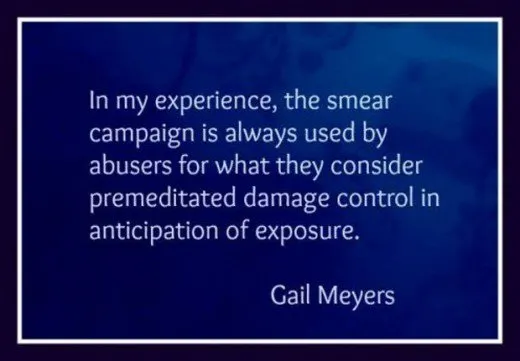
When toxic people feel threatened, they react with more manipulation and aggression. Basically, they start what is known as a smear campaign. They call their enablers to action through more lies, negativity, and exaggerations about their targets. They ramp up their alleged role of victim in their twisted game where they are, in fact, anything but victims. And their enablers naively jump to their defence and (in their minds) heroically rescue them from such horrible behaviour. Most of the time, enablers and flying monkeys don’t even attempt to hear anyone else’s side of the story. They flat out believe the nonsense they’re being fed. In my experience, some enablers will also return to scapegoating the narcissist’s target simply to bring an end to the ranting and raging. What they truly believe is anyone’s guess; their goal is simply to find a (usually temporary) reprieve from the toxic person’s thunderstorm. Overall, though, toxic people will pull out all the stops in an effort to maintain their control and position within their environment. Those false narratives are the very foundation of the protection of their egos. If they couldn’t triangulate and place blame on others, then they might ultimately be asked by their enablers to face accountability or, even worse, be forced to honestly evaluate themselves and engage in introspection. To a narcissist or other toxic individual, that would be a fate worse than death.

So if we’re the scapegoat and we recognize, based on the behaviour of others, that the narcissist/toxic person in our life has been frantically pumping those bellows and turning up the heat against us, even though we’re typically left in the dark as to what has been said, what can we do? Well, that varies by individual. One method that people find useful is to not JADE; that is, don’t Justify, Argue, Defend, or Explain. Yes, that’s a challenging task. No one wants to have lies floating around about them, and it’s human nature to want to JADE. But another more viable option is to simply live our lives and let our behaviour speak for itself. And in all honesty, silence speaks volumes, people. It truly does. There will always be enablers and flying monkeys. That’s just a fact of life. It lies with us to decide how much we will allow those dynamics to create negative personal impacts for us. Yet another option is to learn to let go of or distance ourselves from people who don’t see us as we truly are, but, rather, choose to believe the tales being spun about us by toxic people who are all about being in control and actively working to destroy relationships that they feel threatened by. Even though it’s easy to feel trapped within toxic systems, and we’ve often been trained to feel that we’re permanently stuck, helpless, and lacking any control over our own lives, we do have choices as to how we react to toxicity and dysfunction being aimed at us. We truly do have power. Remembering that fact and feeling empowered by it is half the battle.

Until next time,

Heather ~Natural Clarity Coaching~ naturalclaritycoaching.com na********************@***il.com Natural Clarity Coaching on Facebook, Instagram, LinkedIn, and Twitter

« Older posts