Tag: choices

Happy Holidays! Here’s some tips to help you get through, especially if toxic people are in the picture

Well, here we go.  Another holiday season is upon us.  While special occasions should be enjoyable, they can be quite the opposite when toxic people are involved.  Be they partners, family, friends, coworkers, etc., some people seem to drag their drama and unpleasantries to every party, gathering, and dinner table when the holidays come around.

As I’ve mentioned in previous posts, if we need/want to attend events that will include narcissists and other difficult people, boundaries are always at our disposal.  That could include avoiding conversations, speaking minimally if we get pulled into any chit-chat, or walking away if we feel the need to do so.  It’s possible to be polite and not make a scene when attempting to avoid contact with someone.  Unless we’d like to make a scene, of course.  In that case, go for it!  Just be true to you, whatever that may look like.  And even if we’re in a room full of enablers (flying monkeys) of the toxic person/people, we can hold our heads high while recognizing that narcissists are very convincing, manipulative people who can pull the wool over some people’s eyes.  But that often changes.  Until then, we can define it as one of those “it is what it is” situations.  In the end, the behaviour of toxic people and their dutiful flying monkeys has absolutely nothing to do with us.  We just happen to be the (often scapegoated) current target of their misery and drama.

We can also choose not to attend events at which the person or people in question may be.  Yes, it sucks to miss out but we need to weigh that against loss of peace and increases in stress levels.

For those of us who are low- or no-contact and have been choosing not to attend events with certain individuals, the little worm of loneliness may try to creep in.  But we can ignore that feeling by keeping ourselves busy with new traditions, hobbies, or making plans for spending time with people who are less challenging to be around.

And above all else, make time for self-care.  Even five minutes can help if that’s all the time we can manage.  Deep breathing, yoga, going for a walk, time with friends, a warm bath…whatever gives us some downtime and relaxation can make a world of difference.  Absolutely every little moment of self-care helps our bodies, minds, and spirits to stay resilient and provides optimal chances for overall wellbeing.

Happy Holidays!  We can do this! 

Until next time,

Heather ~Natural Clarity Coaching~ naturalclaritycoaching.com na********************@***il.com Natural Clarity Coaching on Facebook, Instagram, LinkedIn, and Twitter

It’s YOUR Life

As a member of many online groups on the subject of dealing with narcissists and other toxic individuals, I have observed a variety of common themes within posts. A main current is that of one’s life not feeling like their own. This typically takes the shape of people being almost constantly bombarded with opinions, criticisms, and unsolicited advice about how they should be living their lives, particularly as adults. And, taking it one step further, if the individual doesn’t conform to the opinions, criticisms, and unsolicited advice of these people (narcissistic parents, partners, friends, colleagues, etc.), they will be faced with some form of punishment such as the silent treatment or abandonment, guilt-tripping, a smear campaign, or some other manipulative treatment meant to cause someone to “do as they’re told”.

What we need to keep in mind is that this is OUR life. No one else has the right to tell us how to live it, nor do we owe anyone explanations for our decisions. If someone feels that it’s acceptable to dole out punishment because we have not followed their advice on something within our own life, that’s very telling of their character and not ours. And we have no obligation whatsoever to anyone but ourselves when it comes to our life decisions. Going forward, we may also need to evaluate our relationships with those who feel that they are justified in telling us how to live and then trying to manipulate and control us into doing what they want. There are ways (such as low or no contact, placing boundaries, etc.) to protect ourselves from that type of behaviour.

If we follow our hearts and dreams, trust ourselves as captains of our own ships, and steer clear of other people’s unsolicited interference in our decision-making (very different situation from those times we may approach a trusted individual for advice), we will be fine. And, in all honesty, we all make mistakes. We’re human. As long as we learn from those mistakes, that’s all part and parcel of a growth mindset. It makes us stronger, gives us greater knowledge and experience, and empowers us as we journey through life. No one is intended to have others run their life for them. Nor should we feel guilty or wrong if we make our own decisions. We need to take our own path, believe in ourselves, and not be held back by anyone or anything. So, get out there and live life to its fullest and on your own terms.

Until next time,

Heather ~Natural Clarity Coaching~ naturalclaritycoaching.com na********************@***il.com Natural Clarity Coaching on Facebook, Instagram, LinkedIn, and Twitter

Life as the Family Scapegoat

From the perspective of an ACON (Adult Children of Narcissists) and a DONM (Daughters of Narcissistic Mothers), I could literally write a book on my experiences. In all honesty, anyone who grew up in a disordered household headed by a narcissist will have innumerable stories they could tell. The tales we can tell are our own but, sadly, the majority of them are incredibly similar at their root level. They all generally boil down to narcissistic behaviours and how they domino out to everyone in their orbit.

If I were to go to a more personal level and summarize my life as the child of a narcissist into its most basic form by using a few examples, it would be this:

As the family scapegoat, I felt from a very early age that my mom and I simply didn’t ‘jive’. The connection just wasn’t there. Being female, and through no fault of my own (from stories recounted to me, this appears to have started when I was just a baby – for example, being told many times over the course of my life that she wanted to throw me against a wall because I cried when I had colic), I triggered her own deep-seated issues, which caused her to target me and resulted in a lack of a bond between us. This woman adores, supports, encourages, brags about and idolizes my younger brother. It’s not as though she is incapable of those things. Ironically enough, when he and I have made similar decisions in our lives as adults, she has raved about how wondrous his choices were but somehow managed to find fault with all of mine. Although this narcissistic behaviour became abundantly clear to me many years ago, it was incredibly confusing when I was younger, and led to me accepting her nonsense and losing any self-esteem or confidence I may have had. This was my mother. My dad went along with it. I believed her to be the all-knowing and wise person she claimed to be. If she deemed me a disappointment and a failure, then she was probably right as far as I was concerned. That’s what narcissistic abuse has the potential to do to a person when they don’t have a knowledgeable support system or awareness to lean on.

Throughout my childhood and into my teen years, I was pressured and expected to excel at everything I did while, simultaneously, a cloud of low expectations hung over my head. My mom expected me to be the best (because in her mind this would make her look good to the outside world) while at the same time telling me I was “just average” (she’s big on labelling, especially when it comes to intelligence). To add insult to injury, no matter how well I did in school or other pursuits, it was never good enough for her. An ‘A’ on a test would result in her questioning why it wasn’t an A+. On occasions when an A+ was awarded, apparently it was obvious to my mom that the test was too easy and likely everyone in the class did well on it. Or sometimes she surmised that the teacher must have favored me and therefore the mark wasn’t truly representative of my (in her opinion, limited) abilities and was undeserved and, in fact, unfair to my classmates. The same judgments were a constant for any of my other pursuits, including sports and, especially, music. She always heard that one little mistake and, in her opinion, that ruined the entire performance. That one error would be blown out of proportion and zero credit would be given for the thousands of correct notes and other musical elements that go together with them. Looking back from an adult’s point of view, I realized that from a young age I began focusing on the negative and not looking at my strengths as a direct result of my mother’s constant judgments and criticisms as well as the almost complete lack of encouragement and support. One mistake became catastrophic in my mind.

My friends were also constantly being critiqued and negative comments made to me about them. In her mind, I never chose the ‘right’ friends (or partners as I got older). She would literally suggest the people that I should spend time with (people she felt would be “good friends”) and would badger me about it on a regular basis. There would be comments made by her that my chosen friends were abusive (ironic, isn’t it?!) and that I needed to “get a backbone” and “stand up” for myself. One time when I had a falling out (temporary, thankfully) with a friend (which, by the way, was instigated by my mom and her constant prodding), I shared with my mom just how upset I was that I felt I had lost my best friend. Rather than comfort me or say something supportive, she started crying and told me that she thought she was my best friend and that what I said had hurt her deeply! Within a couple weeks, though, she was talking about how many years she and her “best friend” had known one another!

One moment that is very vivid for me after many years was the time that I told my mom that I was feeling depressed. After getting this out in the open, I started to cry because I was feeling emotional. She slapped me across the face, told me to “snap out of it” and then stormed out of the room, slamming the door behind her. Needless to say, that was truly a lesson in not sharing my feelings that has stuck with me since then. Working through it has been a process but is well worth it.

In terms of my family of origin (FOO), it was dysfunctional from day one. My dad, bless his heart, is a lovely man who is loyal and kind to a fault. Does he see my mom for who she is? I don’t know for certain. I’ve seen glimpses of awareness over the years but his enabling behaviour continues regardless. However, I do understand the reason for this. My mom has a strong “you’re either with me or against me” mentality with everyone in her life. If my dad even slightly appears to side with anyone but her, days or sometimes weeks of misery rain down upon him. Her vicious griping is equally as undesirable as her cold stares and silent treatment. I don’t blame him for wanting to avoid all of that. I get it because I’ve lived it, too. He has spent decades working/escaping more than he was home so I’m sure it’s nice to look forward to downtime rather than dreading it. But it’s also really difficult for me to have always been the scapegoat (my golden child sibling was, of course, rarely held accountable for anything), the black sheep, the one “in the wrong” no matter what, the one whose perspective was not allowed to be heard. As an aside, I had an absolutely wonderful grandmother who lived nearby who was supportive, loving, caring and an amazing friend. Without her … well, I wouldn’t even want to imagine how much more challenging life would have been. Although we rarely spoke of my mom or her behaviour (it’s quite likely that she had never put a name to it, and she was also someone who didn’t speak of others behind their backs), my grandma was there for me and that was what mattered.

Fittingly enough, the final narcissistic straw for me that led to many and continuing years of low and rare contact (never in-person or by phone) with my parents was, after several months of ridiculous drama, my mom pressuring my dad to the point where he informed me that I had “been the problem in this family for XX years” (the X’s represent my age at the time). Yes, folks, apparently my just being born was an issue and, in fact, the very reason our family was so disordered. After all that, I was then informed by my mom that my dad wouldn’t have said that (it was said in front of a witness) and that I needed to apologize. And that situation from start to finish is something that really sealed the deal for me in recognizing that I genuinely was not and had never been “the problem” in my family, no matter how much my narcissistic mother needed to label me as such in order to avoid dealing with or having other people focus on her many serious issues and the trouble those had caused within our family unit. Before I could walk, talk or be independent enough to even cause a problem for anyone, I was negatively labelled and that continued on because my mom needed it to and my dad felt that he was required to go along with it or else be made miserable (yes, he had choices but his blind loyalty and trying to protect his own peace traditionally came and still comes first). And then to be be informed that I had made up my dad’s words to me and should apologize … well, that was added to the already large stores of strong evidence that my mom holds neither herself (I don’t recall her ever sincerely accepting responsibility for her actions or giving a genuine apology for anything) nor anyone who acts on her behalf accountable for anything. Shifting the blame is typical behaviour, particularly blaming the family scapegoat.

So, obviously this is an incredibly shortened version of a small number of my experiences within a narcissistic family. There are hundreds, maybe thousands more that I could write about but it would take me well beyond the scope of a website post. Since becoming aware of my mother’s issues, how it impacted my family of origin, and how it has deeply affected me on more levels than I ever thought possible, I have read, researched and taken in everything possible on the subject of narcissism and its far-reaching impacts. I have worked diligently on my own recovery and committed years ago to helping and supporting others in doing the same. I also firmly believe in educating people in the realm of narcissism awareness so that some might be spared from being victims of the damage caused by individuals with this personality disorder. Difficult as they were, my experiences have made me the person I am today and also placed me in the position of being there to help others who find themselves in the grips of narcissistic abuse and/or attempting to recover from it.

Until next time,

Heather Natural Clarity Coaching naturalclaritycoaching.com na********************@***il.com Natural Clarity Coaching on Facebook, Instagram, LinkedIn and Twitter

Dealing with the emotional reaction to realizing you’ve been experiencing narcissistic abuse

The realization of the fact that you’ve been experiencing narcissistic abuse is a double-edged sword. On the one hand, your eyes have been opened and you are now aware, which offers you the opportunity to make well-informed choices for yourself. On the other hand, this awareness often brings with it feelings of anger, regret, sadness, shame, isolation, confusion and so on. It basically takes your emotions on a whirlwind roller coaster ride.

My advice is to allow yourself to fully feel the array of emotions. They will be intense and sometimes overwhelming but you need to feel them in order to move on to processing them. Cry, scream, punch a pillow, etc. If you feel the need to talk with someone about your journey, do your best to turn to someone you know you can trust. This could be a family member, friend, support system such as Natural Clarity Coaching, or a counsellor/therapist. It’s not advisable to share your feelings with your abuser because that will simply open more doors for them to continue abusing you and playing mind games. Clarity is incredibly important at this time, so not allowing the narcissist to muddy the waters is beneficial. Yes, you’ll want to tell them that you’ve figured them out and that you’re incredibly hurt and upset. Just remember that these are people who lack empathy and compassion; they will never sincerely take accountability for their actions let alone offer up an apology or anything else that might make you feel less damaged. Plus, their goal is to continue to control you and carry on with your focus being on them, so keeping your feelings quiet from this person is usually the best policy. Find whatever trustworthy and helpful support systems you can while you’re moving through this part of the journey. Of course, if you prefer to do this solo, by all means, do. Whatever works for you. If you want to but can’t find anyone (or even if you can but could use more connections), online support groups can be incredibly helpful. There is something comforting and empowering about being able to read posts, write posts or comments if you want, involving people who have been or are currently in a similar place as you in a relationship with a narcissist (parent, partner, friend, etc.), It helps with gaining insight, feeling understood without having to explain yourself, seeing all of the parallels in the narcissists’ behaviours, and gaining strength in the knowledge that you didn’t cause this situation. In fact, many people begin to see that most narcissists seem to operate by the same play book! Sad but true.

The fork in your journey’s path

When you’re with the narcissist or by yourself in these early days of awareness, bring in calming and self-soothing practices such as deep breathing, mindfulness (being present in the moment without judgment), engaging in hobbies, getting out into nature, exercising, to name a few. Try to keep your mind from ruminating and replaying all of the negativity. That will just drag you into a potential state of depression and/or anxiety. And it’s okay to feel anger towards the narcissist but advisable to keep it under wraps. Now is the time to engage in self-care in order to keep yourself strong on all levels. Educate yourself on narcissism and how it has impacted you. Put some time into getting back in touch with yourself, your needs, your hopes and dreams. Focus on the future and what and who YOU want in your life from now on. You have arrived at a fork in your journey’s path and you have options from which to choose. Make plans for how you will deal with your new view of the relationship in question. Yes, there will no doubt be days that it all seems like too much and you might feel utter sadness and loss. You might even try to convince yourself that you’re wrong about this person and that you should give them a second chance. That’s perfectly ‘normal’.

As I’ve mentioned in previous posts, a great gauge for relationships is honestly taking a close look at how you truly feel when you’re around someone. Does the way they treat you make you feel good about yourself? Do you enjoy spending time with them? Do you feel cared for and important? Or does their behaviour make you feel unloved, unappreciated, and generally less-than? Is there often an air of condescension and disdain from this person when you interact with them? Do you regularly feel fearful in their presence, like you’re walking on eggshells, or worried that they could abandon you at any moment? Do you feel manipulated, controlled and/or under attack and as though you’re always making them upset and/or angry? Asking yourself these questions and answering them with 100 percent honesty can be a great reality check, especially if you have recently wondered if or decided that someone in your life is abusive towards you.

In summary, here are possible steps (in their simplest form) towards recovery:

  1. Let the information about the narcissist and abuse sink in. Take all the time you need. It is typically shocking and life-altering when this revelation takes place.
  2. Allow yourself to fully feel the emotions that come along with this realization, regardless of how difficult it may be. Do your best to not skip this step. It may seem too intense or as though you can just stuff everything down, but it doesn’t work that way. Feel them, because whether they make you angry, sad, confused, empty, or anything in between, you need to feel them. This is an integral part of the process.
  3. While you are working on Step #2, do some research on narcissism and narcissistic abuse. You will likely discover that narcissists are disordered, dysfunctional people (most of whom have been hurt by other narcissists) who spend every waking moment trying to protect their fragile egos. If you happened to get caught up in their vortex, just know that their behaviour had nothing to do with you. You are not to blame. They are on auto-pilot in their lives, seeking to constantly fill a never-ending void (supply of attention from others) and to placate and dull their underlying feelings of weakness, neediness, low self-esteem and dysfunction. They typically demonstrate the same cycle of behaviours in most of their relationships. When you realize that, despite all the narcissist’s complaints and projections directed at you, their problems and issues are not your fault, you aren’t defective or to blame for everything that goes wrong in their life, you are deserving of kindness, respect and caring, then you will learn to expect so much more for yourself and not be willing to accept sub-par treatment.
  4. Begin to process your emotions. You’ve taken the opportunity to feel them, and now it’s time to look at them from a more practical standpoint. Sometimes it helps to do this with a therapist or within a safe support system. But if you feel that you want to start out on your own with it, give it a try. Don’t expect this stage to be a quick one, though. The gamut of emotions has likely been run throughout your relationship with this person so there will be a lot to sort through and try to make sense of. You may even question everything you felt or believed in the past. You may need to revisit many different memories and experiences in order to look at them from a new point of view. That’s okay. In time, your mind and heart will put it all together in such a way that you can move forward more easily. For now, show yourself patience, understanding and love. You’ve been through a very difficult experience and you need to feel compassion for yourself.
    Whatever you do, don’t skip this step.(#4). When we leave emotions and challenging experiences unprocessed, they don’t just go away. They will interfere with our everyday lives and new relationships and friendships, sometimes in ways that the connection to your past experiences isn’t even on the radar. They will pop up at times when you least expect them, sometimes in the oddest of ways. But have no doubt, they’ll be there until you deal with them once and for all. Imagery can help here. A good exercise is to face the memories/thoughts/feelings head-on. Picture each of them as being on a sheet of paper. Be honest with yourself about how you felt at that particular time and how you feel now. You could even write everything down and then burn the papers later, or work through it out loud with a trusted support person. And then, when you feel ready, imagine placing that sheet of ‘memory’ paper into a file folder marked ‘Closed’, which then goes into a filing cabinet or even a bonfire. Whatever works for you, give it a try. EMDR and Brainspotting are also very helpful for processing difficult emotions and thoughts. Find a qualified practitioner if this interests you.
  5. Start making plans for your future that include your hopes and dreams. It’s finally your time to fully take care of yourself and begin to look forward to what lies ahead on your journey. And now that your awareness of narcissism has grown, you will be much less likely to fall prey to a narcissist in the future.

Wishing you well on your journey!

Until next time,

Heather ~Natural Clarity Coaching~ www.naturalclaritycoaching.com na********************@***il.com Natural Clarity Coaching on Facebook, Instagram, Linkedin, Twitter

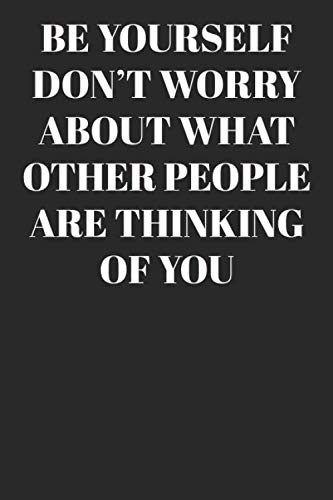
What other people think of you is none of your business; an important key for living a happier life

Here’s the lowdown on many people – they will believe whatever suits them about a particular situation/person. Whether their conclusion is accurate or not, their existing belief system, need to ‘follow the crowd’, low self-esteem or a whole host of other factors, will shape their perception and judgment of whatever information is in front of them.

If you happen to have been the subject of a conversation that you are made privy to afterwards and you appear to have come out looking like the ‘bad guy’, you could spend all day, every day attempting to convince certain individuals of your innocence, etc. But the fact remains that no matter how much energy you put into justifying and defending yourself, they will still believe whatever they want to believe about you. We can only control our own thoughts and actions. There is absolutely nothing any of us can do when it comes to what someone else chooses to believe about us, true or otherwise.

When narcissists are involved, the situation can be even more challenging. If a narcissistic individual has targeted you and started a smear campaign against you to other people, this can be a difficult enough situation to cope with. Add in the high possibility that the narcissist will be portraying themselves as a victim as well, and you will typically be looking at a heaping pot bubbling over with gossip, untruths and judgment.

I’ll admit it – this 110% used to bother me. It was a driving force in my life for years upon years. I felt as though I needed to justify my words/actions and defend my character and reputation to all who may have been manipulated by the person in question (most often a narcissistically-inclined individual) into believing that I was (fill in the blank). Those situations caused me endless worry, sleepless nights and a ton of stress and anxiety. I naively believed that if I was given an opportunity to plead my case, people would miraculously recognize that they had been given false and misleading information and they would instantly “see the truth” and change their erroneous beliefs about me. It definitely doesn’t work that way with most people. We all have our own perceptions, belief systems and moral code that we live by and it’s rare for any two people to share the exact same ones.

For me, the big a-ha moment came when a situation took place several years ago involving a person I absolutely adored, someone I thought should have known me better than to believe the tall tales of a narcissist. And yet, they did just that. They believed the narcissist and then destroyed our relationship over it. It was as though a light bulb went on in my mind. I realized then and there that no matter what I did or said or shouted from the rooftops, people will believe what they choose to believe, regardless of whether it is accurate or not. When a narcissist is at play as well, gleefully adding to the character assassination with their distorted stories of rewritten history and claims of being victimized, everything becomes just that much more intense.

I have to say, even though the situation that brought me to this awareness caused extreme emotional distress at the time, it also removed a huge weight. This person who I thought knew my character well enough to see through untruths about me had chosen instead to accept them. I had known this person my entire life and thought I could always trust them to have my back. But, regardless of their reasons for choosing to believe narcissistic tales, it had become instantly clear to me that there was absolutely nothing I could say or do to change what this person believed about me. And if this person who was a close part of my life could make that choice after years of knowing me and completely ignore the fact that I wasn’t capable of the lies being told about me, then those who didn’t know me well or at all undoubtedly could and would do the same, and there wasn’t a thing that would change that. Suddenly, what others thought of me, whether they believed outright lies about me, whether they heard my perspective or judged me in ways that didn’t fit with my character – it no longer mattered to me or controlled me in any way. It was an emotional and empowering moment in my life. That self-imposed burden of caring what other people thought of me or of anything or anyone else, for that matter, or naively thinking that the truth would always prevail, was instantly removed and tossed away, never to return.

The truth is that, without a doubt, most people (those who don’t have your back, I mean) will believe what they want to believe about you, even if it’s some nonsense imparted to them by a narcissist with a vendetta against you. Whether those beliefs are good or bad, accurate or inaccurate, there is absolutely nothing we can do to change someone else’s beliefs. Setting ourselves free from the shackles of outside opinions is an incredible gift. Recognizing that regardless of what we say or do, others will believe what they choose to believe, can make an enormous difference in the quality of our lives. We have the ability to set ourselves free from these confines and to go forward each day knowing that we do not need to be slaves to what anyone else thinks, feels or believes about us.

You know your character and exactly who you are. Go out into the world with your head held high. Life goes on for you regardless of what other people are thinking of you or anything else. And if you find yourself struggling with it some days, just remember this saying – “What other people think of you is none of your business”.

Here’s an idea and corresponding link for a journal to keep track of your thoughts and experiences while on your journey:

https://amzn.to/3RDW3SV

Until next time,

Heather ~Natural Clarity Coaching~ www.naturalclaritycoaching na********************@***il.com Natural Clarity Coaching on Facebook, Instagram and Twitter

*Disclaimer – I may earn a small commission if you click on the above link and purchase the product.*

Healthy Lifestyle Choices Do Make a Difference

No matter what life may throw at us, one of our best lines of defence is making healthy lifestyle choices. Those include consuming nutritional food and beverages, regular exercise, sufficient sleep, stress management and self-care. Vitamin/mineral supplements can also be beneficial in many cases but it is advisable to discuss anything of this nature with a physician in order to ensure that it is a safe choice in your unique case.

When it comes to making healthy lifestyle choices, they don’t need to be extreme in order to make a difference. Doing things in moderation is typically the way to go. It’s also quite possible to implement choices that are likeable and enjoyable. When we enjoy what we eat and the things that we do for our wellbeing, it makes the whole process of having and maintaining a healthy lifestyle much less complicated.

I’ll be the first person to say that it can be incredibly challenging to keep healthy lifestyle choices at the top of the priority list in cases of, say, dealing regularly with a narcissistically-inclined individual. When feeling overwhelmed, exhausted and lost, self-care may feel like it takes too much effort or that it’s a lost cause. However, now is EXACTLY the time that healthy lifestyle choices, especially self-care, can help us the most.

The bottom line is that choosing good options for ourselves when it comes to food, beverages, exercise, sleep, stress management and consistent self-care is one of the most positive and beneficial actions we can take, regardless of what is going on around us. These choices, no matter how small or simple we need for them to be at times, are the ones that will fuel our brains, mental wellbeing and bodies every day, which will, in turn, help to maintain the favorable momentum along with promoting and supporting long-term health and wellness.

Until next time,

Heather ~Natural Clarity Coaching~ www.naturalclaritycoaching.com na********************@***il.com Natural Clarity Coaching on Facebook, Instagram and Twitter

The Silent Treatment (narcissists love using it)

So, my last post touched on how narcissists use words to control. Typically, if words don’t have the desired impact that a narcissist wants, they will turn next to the silent treatment. Simply put, this involves the refusal to communicate verbally to a certain person or people. It’s a form of punishment, control, avoidance and/or disempowerment.

For example, let’s say I have stood up to a narcissistic person who has been verbally abusive towards me. They have then attempted to justify their poor behaviour by blaming it all on me and then tried to twist reality to say that I have, in fact, somehow victimized them. But I’m not having any of it and I let them know it. Next tactic – the narcissist begins giving me the silent treatment by refusing to speak to me any further in that moment and then possibly for days, weeks or more beyond that. Chances are that this will be happening in conjunction with a smear campaign (see prior blog post in archives) in an effort to turn others against me as further punishment. That’s pretty much how this process works, with minor variances.

Depending on who the narcissist/narcissists is/are in your life, being given the silent treatment can be a very challenging experience. It can bring with it feelings of guilt, shame, abandonment, loneliness, loss, betrayal and so on. But, just like most things related to narcissism, it’s all about control for them. Controlling with words, controlling with silence, controlling with other forms of abuse. Consider the source. This is a disordered individual with a hypersensitive ego that they will do almost anything to protect. Their behaviour has nothing to do with anyone but themselves and their own issues.

So, what are some potential ways to deal with someone who is behaving in such an uncommunicative, juvenile and hurtful fashion? Well, depending on your situation, you could completely ignore them and get on with things while their behaviour runs its course. Alternatively, you could let them know that you can see what they are doing and that you aren’t interested in playing that game, and then forget about them entirely until they stop with the nonsense. Low contact or no contact are also options, either temporary or permanent (see post on this topic in archives). Of course, you could beg them to speak to you or scream until you’re hoarse, but that only serves to give them exactly what they want – control and power.

The end goal in dealing with a narcissistic-type person is to keep your wellbeing and sanity in place. Do what you feel you need to do. But, also, the constant theme should be to ensure that there are boundaries in place to protect yourself on all levels, and that means not allowing yourself to be drawn into their regular attempts at manipulation and control.

No matter what, your wellbeing comes first. Focus on your own life, keep busy, exercise, engage in hobbies, spend time with non-narcissistic friends/family and try to put negativity out of your mind. Silent treatments are rarely permanent. In the meantime, see it for what it is (basically a sulking toddler) and don’t give away any of your power or sanity to it. It gets easier every time. And if you arrive at a point where you simply choose not to have much or any future contact with this individual, that’s your prerogative. It’s your life and you have the right to live it as you see fit.

Heather ~Natural Clarity Coaching~ http://www.naturalclaritycoaching.com na********************@***il.com Natural Clarity Coaching on Facebook, Instagram and Twitter

Nutrition, Exercise, Sleep – The Big 3

Nutrition.  Exercise.  Sleep.  These three items are integral to our overall health and wellbeing.  Making them part of a daily routine helps to ensure that we regularly include them in our lives in positive ways.

sleep exercise nutrition venn diagram

One thing I have found to be very true is that moderation is key when it comes to eating.  Quantity and quality are meaningful here.  Try to eat three adequately-portioned meals per day with a couple of snacks mixed in.  Check out food/calorie guides to determine your best options in your circumstances.  Keep vegetables, fruits and nuts in your daily regimen because they typically pack in plenty of nutritional benefits.  From my experience, it’s preferable to allow for occasional ‘cheats’ because, for many of us, restricting ourselves from a certain item almost always leads to a greater desire for it.

Exercise is another big area.  Try to get yourself moving as much as possible, especially in this time of more sedentary work-from-home situations.  Walking, biking, hiking, dancing, swimming, yoga, sports, skiing, working out, and so on – whatever you like and can manage to do regularly, make it a solid routine.  Do what you enjoy and it will never feel like a chore.

Sleep, although it may seem like something we can do without at times, is integral to our mental and physical wellbeing.  Sleep gives our bodies and minds time to repair and recharge.  Without proper amounts of slumber, we will inevitably begin to decrease in our functionality on both mental and physical levels.

What it all boils down to when it comes to overall wellness is that MODERATION is key.  Someone very close to me who aged gracefully and healthfully, both physically and mentally, into their 100’s, lived life by that very motto.

Nutrition, exercise, sleep – the Big 3!  Maintaining this trio can create huge benefits that will make for a more enjoyable, fulfilling, healthful and possibly long life.

Until next time,

Heather ~Natural Clarity Coaching~  www.naturalclaritycoaching.com  na********************@***il.com  Natural Clarity Coaching on Facebook, Instagram and Twitter

Perspective – A Skill (Superpower?) Well Worth Developing

Perspective is a significant part of our day-to-day lives.  As the saying goes, “If you change the way you look at things, the things you look at change” (Wayne Dyer).  Negative, positive or neutral, our perspective is our choice.

It’s worth mentioning that we all have struggles, some of which can be incredibly challenging.  No matter how difficult, though, we always have the option to change our perspective in terms of how we choose to view any situation.  Sure, life can throw us really rotten curve balls, but viewing something as a learning experience, for example, can take the edge off of the situation and possibly open the mind to solutions.  The school of hard knocks can literally make us stronger people if we rise to the challenge.  We can also opt for changing our perspective in order to reduce stress levels and keep up our momentum for moving forward.

If you change the way you look at things, (1)

At the end of the day, perspective is a choice.  And that choice can literally change our lives if we actively engage in awareness of our ongoing perspectives and then opening our minds to other views.  It can be quite an empowering skill (maybe even a superpower!) once we develop it and learn to put it into practice regularly.

Until next time,

Heather  Natural Clarity Coaching  na********************@***il.com  www.naturalclaritycoaching.com   Natural Clarity Coaching on FB, Instagram, Twitter